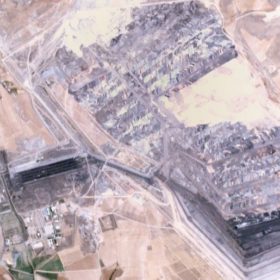
Renewables generation cheaper than coal for many power companies – but not yet for Eskom
An investor tool examining the coal fleets of major global power companies has offered up analysis which flies in the face of arguments solar and wind generation could help turn around the debt-saddled South African utility.
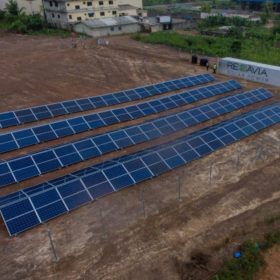
Redavia solar-lease solution keeps fish cool in Ghana
A 90 kW pay-as-you-go solar system is helping a fish trading company cut energy bills at its cooling sites.
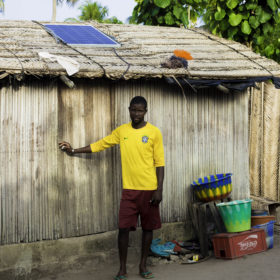
Lumos CEO: ‘There is room for PV of all shapes and sizes in Africa’
pv magazine caught up with the chief exec of the pay-as-you-go solar home system provider to get his thoughts on the claim mini and microgrid business models don’t stack up and the suggestion government-driven utility scale solar should light the way in the sub-Saharan marketplace.
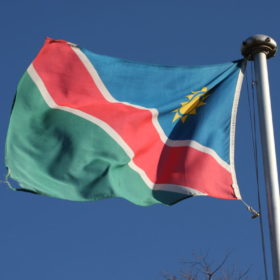
TeraSun Energy announces US$63.2 million investment in 50MW Namibian solar plant
Natura Energy subsidiary, TeraSun Energy, has announced a N$900 million (US$63.2 million) investment in a 50MW solar plant in Arandis, western Namibia.
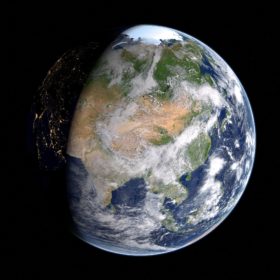
Study examines 7.8 TW solar potential of the Belt and Road route
China’s vast continent-spanning infrastructure project could fertilize solar growth along its perimeter at considerable scale as energy demand in the countries along the route is set to surge.
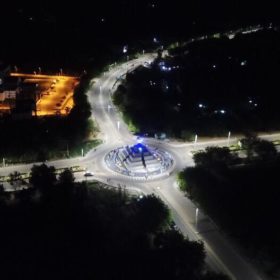
Nigeria taps mini-grids to power universities
Four Nigerian universities are in the final stages of abandoning the country’s main grid to be fully powered by mini-grids. Nigeria aims to use more mini-grid technology to power its people by tapping a $550 million World Bank loan.
PV Modules 4.0: Ultra-high efficiency to deliver lowest LCoE in Middle East and African regions
As utility scale projects and distributed generation (DG) gain momentum in the Middle East and North Africa, what part will ultra-high efficiency modules play? And how much can choosing the right module minimize LCoE, and maximize IRR in the Middle East and African regions?
Join our webinar to find out how module technology innovation can increase production yields in Middle East and African regions, as well as how ultra-high efficiency modules will enhance reliability and performance and reduce risk.

Madagascar wants more solar
The Malagasy government has announced three PV projects, each with a 5 MW generation capacity, will be built this year. The nation’s cumulative installed solar capacity was only 33 MW at the end of last year.
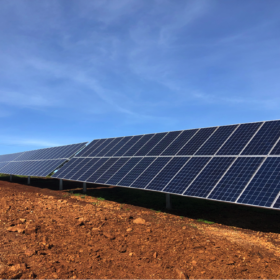
African Development Bank sets up $500m facility for sub-Saharan small scale renewables
The new credit lines are for the development of on and off-grid renewable energy projects. The European Commission is offering the fund a €40 million helping hand.
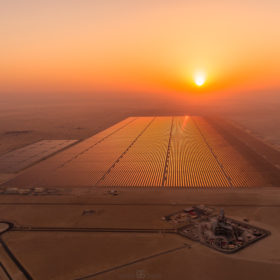
Saudi’s ACWA Renewables sells 49% stake to China’s Silk Road Fund
The Chinese state-owned infrastructure investment fund, which already has strong ties to the Saudi power company, will be a major shareholder in a Middle East and African clean energy portfolio that adds up to 1668 MW of generation capacity.
