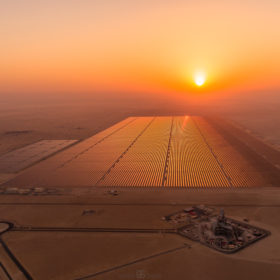
ACWA closes financing of 900 MW fifth phase of giant solar field
The Saudi power company has named the lenders which will finance the latest stage of the gargantuan, 5 GW Mohammed bin Rashid Al Maktoum Solar Park, for an estimated $564 million.

Aluminum energy storage coming to Abu Dhabi
Swedish start-up Azelio says it will have a pilot project up and running in Masdar City by the end of next month. The technology sees electricity used to super heat aluminum with energy released on demand via a heat transfer fluid to drive a Stirling engine.
Remote operation for 900 MW fifth phase of Dubai solar field
Saudi developer ACWA Power has announced One Belt, One Road Chinese infrastructure partner Shanghai Electric will offer engineering, procurement and construction services on the next phase of the Mohammed bin Rashid Al Maktoum solar field in Dubai.
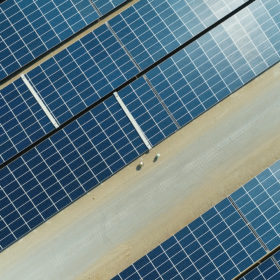
Exclusive interview – Jinko Power on how it offered the world’s lowest solar power price
pv magazine’s Amjad Khashman has spoken to Chinese solar developer Jinko Power about negotiating the world record low price tariff agreed for electricity generated at the Al Dhafra solar project in Abu Dhabi.
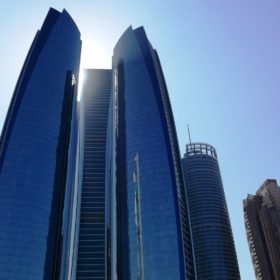
World’s lowest bid of $0.0135/kWh wins in Abu Dhabi’s 2 GW solar tender
Emirates Water and Electricity Co. awarded the 2 GW project to a consortium that includes Abu Dhabi National Energy Co., Masdar, French energy group EDF, and China’s JinkoPower.
Global solar capacity may reach 1,448 GW in 2024
SolarPower Europe has predicted the volume of new PV capacity added this year will be 4% less than last year’s figure because of the Covid-19 crisis. At the end of 2019, the world had topped 630 GW of solar. For 2020, around 112 GW of new PV capacity is expected, and in 2021, newly installed capacity could be 149.9 GW if governments support renewables in their coronavirus economic recovery plans.
Historic-low interest rates will power ahead astonishing solar cost reductions
An Ieefa report has suggested the cost of generating electricity from solar will be near zero in the world’s sunniest regions by 2030-40 – despite what the naysayers at the International Energy Agency might think.
Solar costs have fallen 82% since 2010
The levelized cost of energy generated by large scale solar plants is around $0.068/kWh, compared to $0.378 ten years ago and the price fell 13.1% between 2018 and last year alone, according to figures released by the International Renewable Energy Agency.
Solar could hold advantage in post-pandemic global energy sector
The International Energy Agency has acknowledged dramatic falls in energy investment caused by the Covid-19 crisis but said renewables, including PV, offered an attractive proposition to investors as the dust settled, given their enticing economics and short turnaround times.
Dubai utility clamps down on net-metered commercial solar
Dubai Electricity and Water Authority has published new regulations blocking ground-mounted commercial and industrial solar projects and capping rooftop installations at 2 MW.
