The Hydrogen Stream: UK and Germany invest in tech, mobility and supplies
UK climate tech business Levidian has presented a new device. Loop hydrogen has a typical levelized cost of hydrogen (LCOH) of around £2.27/kg, the company told pv magazine. Meanwhile, companies are considering investment in the Celtic Sea, Hamburg, and Galicia and Toyota has announced that hydrogen-powered engine performance has been improved to levels comparable to gasoline engines in just six months.

UK governments slashes VAT for residential PV, heat pumps to 0%
The new measure will come into force on April 1 and will be in place for five years.

The Hydrogen Stream: Universal Hydrogen builds manufacturing facility in the United States
Elsewhere, Scatec and partners have signed a memorandum of understanding to develop a large scale green ammonia facility in Egypt. Hydrogen developments were also announced in India and the United Kingdom.
UK considers reform of renewables subsidy regimes
A conference about the UK’s electricity market showed organizations are considering the future of the country’s energy sector and how to achieve a net zero economy.
Scotland sourced almost all ‘gross electricity’ from renewables in 2020
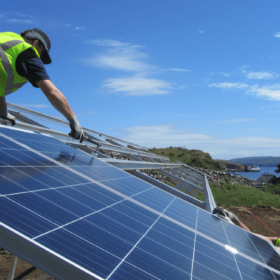
The nation accounted for almost a quarter of the UK’s clean energy generation in a Covid-hit year as renewables accounted for 61.8% of its power mix, according to a study produced by the UK government.

Thermochemical storage-plus-rooftop PV to store heat for winter months
A group of researchers in the United Kingdom is developing a modular, multi-vector energy system that can be installed into new homes and retrofitted into existing buildings to provide seasonal heat storage. In the proposed system configuration, a rooftop solar array would be used to power a heat pump or another electrical heating element, which in turn produces the heat to be stored by thermal devices.
Port-based energy storage relying on organic flow battery tech
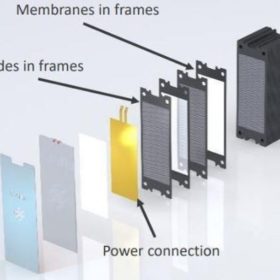
A UK consortium is developing an organic flow battery technology that could be used in ports to supply power to visiting vessels and in-port assets such as cranes and port vehicles. The electro-chemistry for the batteries is being supplied by German battery manufacturer CMBlu, which developed a flow battery relying on high-performance energy storage molecules that are entirely organic.

New flexible solar module factory begins operations in the UK
Operated by UK start-up Power Roll, the pilot factory will reach a capacity of 30 MW by year end. The manufacturer uses low-cost roll-to-roll manufacturing processes and patented microgroove patterns to produce flexible solar panels intended for applications on warehouses and agricultural sheds whose roofs are not strong enough for conventional arrays as well as in vehicle-integrated photovoltaics.
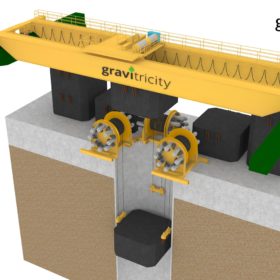
Gravitricity to build 4MWh gravity-based storage facility on UK brownfield site
British start-up Gravitricity secured funds from the UK Department of Business Energy & Industrial Strategy (BEIS) to build its second gravity-based storage project. The feasibility study is expected to be finalized by the end of this year.
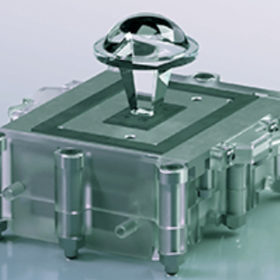
The Hydrogen Stream: CPV-powered PEM electrolyzers for 1.2MW demo in Portugal
Fusion Fuel Green has developed a small PEM electrolyzer that will be used in a green hydrogen project in Iberia. Elsewhere, India’s Adani Group and Canada-based PEM fuel cell producer Ballard Power Systems have signed a memorandum of understanding to evaluate a joint investment in the commercialization of hydrogen fuel cells for mobility and industrial applications in India.
