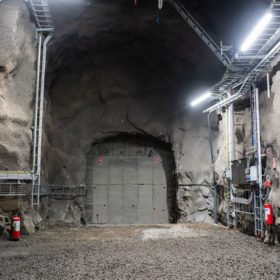
Swedish consortium completes rock cavern for green hydrogen storage
Vattenfall and its partners have finished building a 100-cubic-meter underground facility to store green hydrogen.
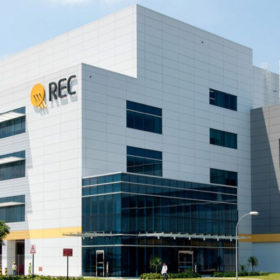
REC Group secures EU funding for HJT solar factory in France
REC Solar has announced plans for a PV module gigafactory in France, along with 17 other clean tech projects that will share €1.8 billion ($1.8 billion) of grants from the European Union’s Innovation Fund.
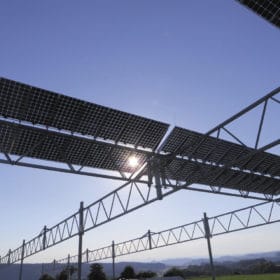
New method to evaluate performance, LCOE of elevated agrivoltaics
Scientists in Belgium have developed a way to assess elevated agrivoltaic projects, by calculating key performance indicators such as energy yield and levelized cost of energy (LCOE). They have found that shade-tolerant crops such as potatoes could potentially be paired with around 1,290 GW of PV capacity in Europe.
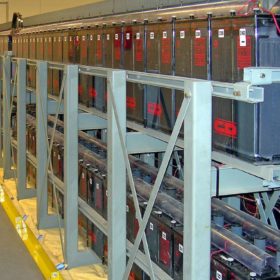
The real value of energy storage
An international research team has developed a new way to evaluate the economic value of energy storage technologies. They went beyond pure cost assumptions to consider the benefits that such technologies could bring to energy systems.
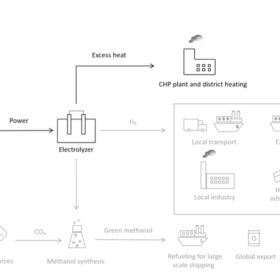
Waste heat from hydrogen production for district heating
The use of waste heat from hydrogen production in district heating could increase the attractiveness of green hydrogen, according to new research from Sweden.
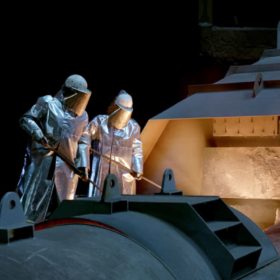
The Hydrogen Stream: Global electrolyzer market to reach 8.5 GW by 2026
GlobalData has predicted that the global electrolyzer market will hit 8.52 GW by 2026. BP and Thyssenkrupp have agreed to cooperate on the use of hydrogen in the steel sector, while electrolyzer supplier Nel Hydrogen has secured orders in Australia and Denmark.
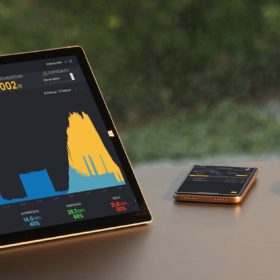
Management system combines rooftop PV, heat pumps
Swiss startup Solar Manager AG has designed a new energy management system that is compatible with the inverters of Solaredge, Solax, Kostal, Fiemer, Fronius, and other manufacturers.
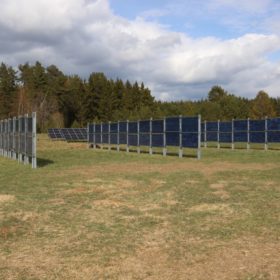
The stabilizing effect of vertical east-west oriented PV systems
German researchers have looked at how vertical PV systems could provide more electricity during periods of higher demand, while enabling a higher level of integration with agricultural activities.
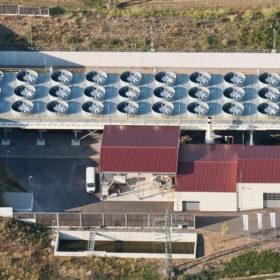
Enel, Vulcan Energy mulling lithium mining in Italy
Enel and Vulcan Energy are looking at the potential for lithium mining at a site near Rome.
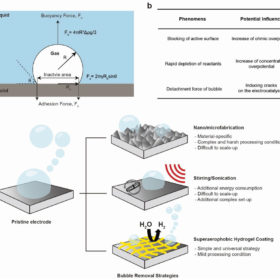
The Hydrogen Stream: New hydrogel for bubble detachment in hydrogen production
South Korean researchers have published a new study on the use of hydrogel to remove gas bubbles in hydrogen production, while Shell has revealed that it will continue with its hydrogen investments in the Netherlands, Vestas, meanwhile, said it will launch a pilot project to use hydrogen in a crew transfer vessel.
