
Curtailment is not the enemy
A new report by IEA-PVPS Task 16 looks at the use of “implicit storage” to transform intermittent renewable sources such as solar and wind into firm power generation. It shows that the total cost of the electricity system transformation could be lowered with the optimal use of capacity overbuilding and dynamic curtailment.

Only5mins! – Wind and solar hybridization
Joachim Steenstrup, head of public affairs for Denmark-based Eurowind Energy, speaks to pv magazine about hybrid solar-wind projects, why the hybridization trend makes financial sense, and how PV-wind hybrid installations are the building blocks for the “energy centers” of the future.
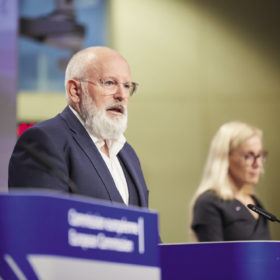
The Hydrogen Stream: Europe introduces new green hydrogen rules
The European Commission has presented the final version of its new rules for green hydrogen, with looser requirements to qualify hydrogen as “green.”
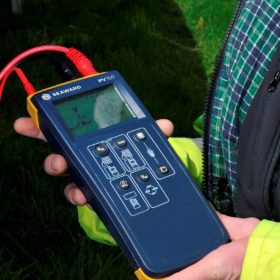
UK manufacturer releases new PV testing tool
Seaward’s new PV150 test instrument measures open circuit voltage, short circuit current, earth continuity, insulation resistance, and operating current. It weighs 0.95 kg and comes with a two-year warranty.
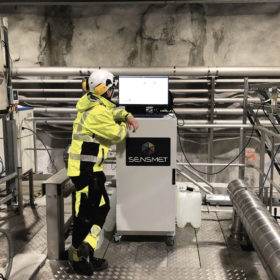
Can Sensmet crack lithium?
Finnish startup Sensmet Oy says it has attained the lithium manufacturing ‘Holy Grail’ of real-time, continuous monitoring of the battery raw material. This would potentially unlock big savings in time and money.
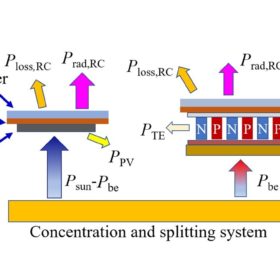
Photovoltaic-thermoelectric tech with potential efficiency of 65%
Chinese scientists have simulated a new photovoltaic-thermoelectric technology, based on radiative cooling and III-V solar cells, to generate electricity at night.
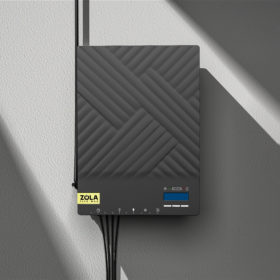
Lithium iron phosphate battery for rooftop solar off-grid applications
Zola Electric’s new lithium iron phosphate battery system charges from solar and the grid and can power AC and DC appliances. It has a nominal voltage of 12.8 V and a nominal capacity of 50 Ah.

PV-powered seawater desalination for afforestation carbon capture
Finnish researchers have proposed the use of solar, wind, and storage to provide desalinated seawater to restore forests. Their model predicts that an additional 10.7 TW of PV would be needed to actually do this by 2100, leading to a cumulative carbon dioxide sequestration potential of 730 gigatons.
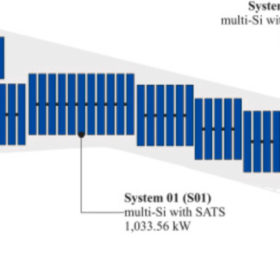
New study shows lower environmental impact with single-axis trackers
Brazilian researchers have compared the environmental impact of two PV plants – one with polycrystalline solar modules mounted on fixed-tilt trackers, and another with the same modules mounted on single-axis trackers. The life cycle assessment shows the system with single-axis trackers reduced carbon gas emissions by 24%, land use by 20%, and water use by 7%.
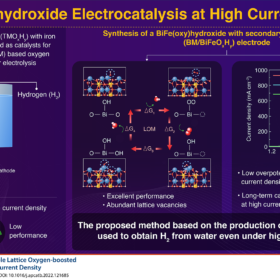
The Hydrogen Stream: Bismuth-based catalyst for efficient OER in electrolysis
South Korean researchers have reported higher performance with a newly proposed BM/BiFeOxHy electrocatalyst for oxygen evolution reaction (OER), due to higher lattice vacancies and the amorphous structure. Institutions in the EU, the UK, and Canada, meanwhile, have announced new plans to provide funds for hydrogen projects.
