
Recycling lead-acid batteries for perovskite solar cell manufacturing
Researchers from China are proposing to use spent battery lead for creating a perovskite that can be used in the production of solar cells that are based on this promising material. The proposed one-step process, which was tested in the production of a 17.38% efficient perovskite heterojunction cell, is said to be cheaper and less energy-intensive than other recycling processes for waste lead from lead-acid batteries.
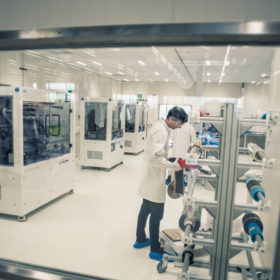
Future perspectives on solid-state storage
Solid-state batteries are viewed by many as the most promising technology to succeed today’s lithium-ion technologies in many energy storage applications. But there are still plenty of barriers to large-scale use of this type of battery. An international team of scientists has reviewed recent progress with the technology, and examined the form and chemistry that commercial solid-state batteries might take.

The best battery for grid level energy storage
A new paper published by researchers at China’s Tianjin University examines the state of the art in grid level energy storage, outlining the pros and cons of various battery technologies being deployed on grids around the world, and remaining challenges that could be overcome if research is pushed in the right direction.
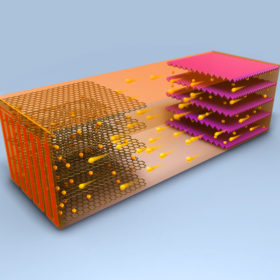
Charging an electric vehicle in 10 minutes
Scientists from Penn State University have developed a self-heating battery for electric vehicles which is said charge in only 10 minutes at 60 degrees Celsius.

Oman reveals bidders in 146 MW solar-diesel-storage tender
The state-owned Rural Areas Electricity Company wants to build 11 solar-diesel-storage projects in isolated rural areas. Pre-qualified bidders in the tender include Engie, Canadian Solar, Akuo, Longi, Jinko, GCL, Abengoa, Total and Belectric.

Pyrazine polymer PHATNs up cathode in sodium-ion batteries
Scientists at the University of Maryland have developed an organic polymer electrode which they claim demonstrates stable function for a sodium-ion battery over 50,000 cycles and also offers encouraging performance in magnesium-ion and aluminum-ion storage devices.
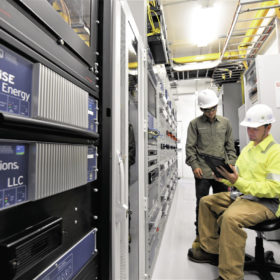
Pxise: Operating the future grid, today
As higher concentrations of renewable energy and storage capacity come online, the control systems of today cannot solve the problem of a two-way predictable grid of the future. Enter Pxise Energy Solutions (pronounced “Pice”). Using real-time data and algorithms to make intelligent decisions, the company’s software technology is breaking down barriers for grids to operate with high levels of renewable penetration. Pxise says its software can unleash the benefits that batteries are able to provide.
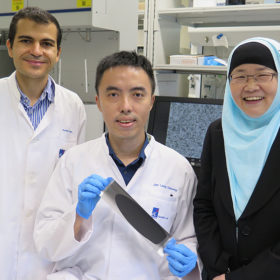
A carbon scaffold to boost lithium-sulfur performance
Scientists at Singapore’s Agency for Science, Technology and Research have developed a new method to produce lithium-sulfur based cathodes which exhibit stable performance and high storage capacity over 200 cycles. According to the agency, this represents “a promising step towards the commercialization of lithium-sulfur batteries.”
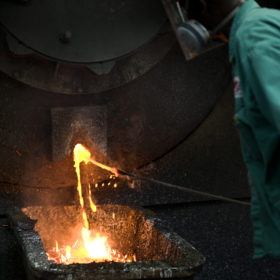
Do lead batteries have a role in the clean energy transition?
The Consortium for Battery Innovation has outlined research goals for advanced lead-based battery concepts, claiming the potential of the technology is “nowhere near fully exploited”. The group, comprised of lead-battery industry stakeholders, says such devices can play an important role alongside lithium-ion and other storage technologies in electric vehicles, renewable energy storage and other applications.

DEWA and Huawei hold strategic summit
The Emirati utility and the Chinese communications giant and inverter maker have discussed how they can work together to roll out solar and storage in Dubai as well as collaborating on cyber security and the use of AI to analyze cyber threats.
