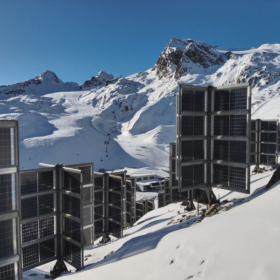
SolarEdge, Helioplant build 6.3 MW ‘cross-shaped’ bifacial PV system for Alpine regions
Helioplant will leverage SolarEdge’s inverter and power optimization technology to power its cross-shaped bifacial solar system specially designed for snowy Alpine regions with high elevation. They anticipate ski resorts will be a big market for the solution which uses SolarEdge’s technology to overcome shading issues caused by the cross-structure.
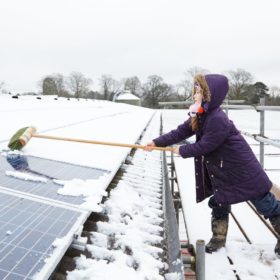
Rooftop bifacial PV can produce over 9% more power than monofacial systems in high-latitudes
A study analyzing urban bifacial PV systems in high-latitude areas found they can generate 9–13% more electricity than monofacial panels under snow conditions, particularly in winter, while also achieving a lower levelized cost of electricity. The research developed a techno-economic optimization model considering snow effects, panel orientation, interrow spacing, and operation modes, highlighting sensitivity to market conditions and discount rates.
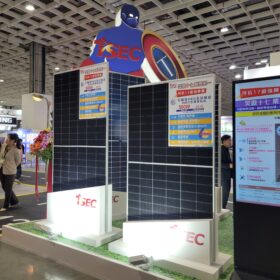
TSEC unveils typhoon resistant glass-glass solar modules
The Taiwanese manufacturer showcased the new module range at Energy Taiwan trade show. Two modules in the lineup boast a wind resistance of 17 on the Beaufort scale, making them typhoon ready, according to the company.
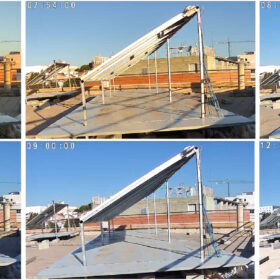
Precise backside irradiance modeling for bifacial PV is often unnecessary
A European research group has developed a new “empirical” method for measuring the backside irradiance of bifacial PV system. The proposed approach was tested across several European locations and it was found to enable annual performance calculations with a fixed backside irradiance share value.

How albedo interacts with different rooftop PV system patterns
Researchers have simulated 160 cases of PV rooftop installation in southern and northern Italy. Among changing parameters were size and type of the panels, as well as their roof cover rate. The considered albedos were 20%, 40%, 60%, and 80%, representing different types of roof materials.
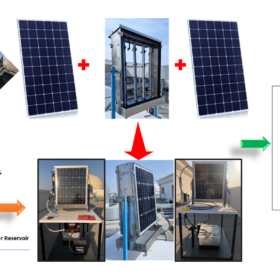
Cooling bifacial PV modules with mist
Scientists have placed mist nozzles inside a bifacial PV module and measured it under an extremely hot climate. The module was found to generate up to 37% more electricity on sunny days and up to 46% more on cloudy days compared to standard monofacial panels.

How to assess bifacial PV system performance on sloped terrains
Scientists have developed a precursor formulation for different PV simulation tools that can help calculate the expected performance of solar farms deployed on hilly slopes. Validation tests against an experimental setup showed an error of less than 3%.

New method to optimize bifacial PV system performance in residential applications
Scientists in Qatar have outlined a new approach to optimize residential bifacial PV systems by combining south-facing and vertically mounted east-facing configurations. The novel methodology reportedly results in a 21.6% increase in a system’s net present value.

New web tool helps find best tilt angle for south-facing bifacial PV plants
An international research team has created a new model that finds the best tilt angle for south-facing bifacial PV plants across Europe. The scientists also considered the Alpine region to examine the impact of mountains on optimal tilt angles.

Determining mismatch losses in bifacial PV based on single-axis trackers
Scientists in Spain have proposed a novel way to calculate the structure shading factor and mismatch losses for the rear side of bifacial PV modules using one-axis trackers. They tested the new methodology in a real PV system and found it is able to establish a linear fit based on distance from the torque tube.
