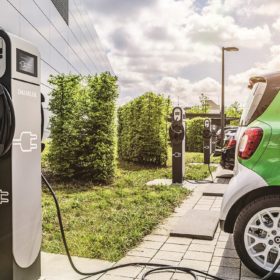
The weekend read: EV charging meets Blockchain
There are a number of reasons to be bullish on electric vehicles. Government support is growing, battery prices are falling, and the technology is constantly developing. But, for the prospect of owning an electric car to become even more attractive, existing EV charging infrastructure needs to be enhanced. This is where blockchain comes in.

Acciona presents ‘world’s first’ blockchain renewable energy certification platform
The technology is said to use blockchain’s properties of providing secure real-time and fully transparent data. The company says that ensuring renewable energy certificates is becoming increasingly important. This is the first step towards a more comprehensive platform that seeks to cover renewable energy assets from other energy companies as well.
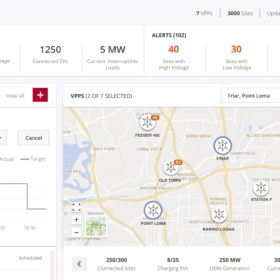
The weekend Read: Soft services, hard impacts
The application of IoT, tapping, and analytics of big data, and much hyped applications like blockchain are making an impact on the solar PV sector and related devices, and also their interactions with the grid. But software has played an important role in the evolution of our industry dating back some 30 years.
EDP adopts blockchain to measure consumption of prosumers in Brazil
The blockchain technology, which was developed by Austrian company, Riddle&Code, is intended to help the Portuguese power provider measure the electricity consumption of each user who owns and operates a solar array installed under net metering.
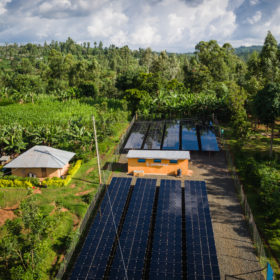
Cryptocurrency to accelerate solar minigrid rollout in Africa
South Africa-based Sun Exchange and U.S. minigrid developer, Powerhive have come together to step up minigrid deployment in rural Kenya by leveraging the crypto economy. The partnership is expected to catalyze up to $23 million of capital and fund around 150 new projects in the country’s power hungry areas.
Survey finds digitalization, decentralization and decarbonization concerns energy leaders
The World Energy Council tracks the top concerns of energy leaders and has created a tool with Arup to display its findings. The rise of digitalization issues and the decreasing significance of fossil fuels indicates a strong renewables market ahead and energy start ups are receiving increasing attention from utilities and leaders

Global Grid launches blockchain technology for solar in Mexico
The digital platform is intended to help developers of large photovoltaic plants to raise capital without having to resort to banks or traditional investors.
Power Ledger partners with Japanese utility in new trial
Australia-based peer-to-peer (P2P) energy pioneer Power Ledger will partner with Japanese utility Kansai Electric Power Company (KEPCO) to trial its blockchain-enabled platform. The limited trial will first involve only 10 homes in Osaka, however, Power Ledger says that Japan is an excellent fit for P2P energy trading.

Blockchain project powered by 45 MW of solar launched in Spain
The project, expected to be finalized by April 2019, is being planned by Spanish blockchain platform, CryptosolarTech. A big cryptocurrency mining server, relying on 3,000 servers to mine cryptocurrencies, will be located near Malaga, in the southernmost part of Spain. Ten solar projects totaling 45 MW will provide the necessary power, the estimated aggregate investment of which is €42.8 million.
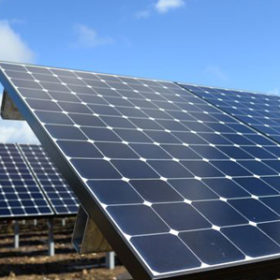
Engie to use blockchain protocol to certify supply of green energy
The French energy giant will use blockchain technology to certify the green energy used in its manufacturing process in France by U.S.-based chemical company, Air Products. Through the software platform for digital assets, Engie hopes to transform its customer-supplier relationship.
