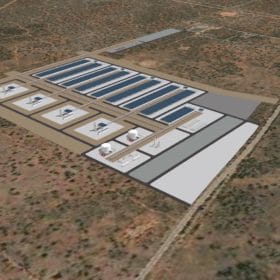
The Hydrogen Stream: 39,700 km European hydrogen network planned, Germany means business
Several heavyweights in Germany have announced projects to move forward with green hydrogen. RWE, Uniper and Bosch have all announced large-scale projects and the German government has allocated €52 million for hydrogen research. The European Hydrogen Backbone (EHB) initiative is proposing a hydrogen network of 39,700 km by 2040, with further growth expected after 2040.
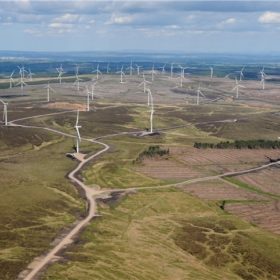
The Hydrogen Stream: EU launches call for low-carbon hydrogen tech, Netherlands unveils €338m plan
Furthermore, Michelin said it wants to become a world leader in hydrogen fuel cell systems and ScottishPower aims to build a green hydrogen plant at a wind power complex. Moreover, a study led by scientists at the U.S. Department of Energy’s (DOE) Argonne National Laboratory suggested new strategies to design perovskite materials to speed up the oxygen evolution reaction (OER), a process that frees up molecular oxygen from water and is key for hydrogen production.

The Hydrogen Stream: strong push from France, new plans and deals in UK, Italy, Brazil, Philippines, Saudi Arabia, Portugal
The nascent hydrogen economy has seen a good amount of developments in a week that showed an increasing number of players taking part in the game. In the UK, British Airways has invested in hydrogen-electric aircraft developer ZeroAvia with a focus on hydrogen-electric power solutions for 50-plus-seat aircraft. In Brazil, Petrobras has joined forces with Siemens to develop green hydrogen solutions. In Portugal, the government and the European Investment Bank signed a non-binding memorandum of understanding for hydrogen cooperation.
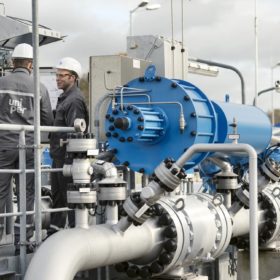
What will African nations require to produce competitive green hydrogen exports?
A robust national strategy, a portfolio of renewable energy assets, public subsidies and, ideally, existing gas pipelines will all favor African nations aiming to become exporters in the energy storage medium, participants heard at a recent two-day green hydrogen conference.
Incentives crucial to avoid green, blue, and even purple hydrogen fading to grey
An Anglo-German report has suggested the environmentally-friendly desire to use only clean power to produce hydrogen, outlined by nations such as Germany, could end up being more emissions-heavy than the more pragmatic embrace of blue hydrogen under consideration in the U.K.
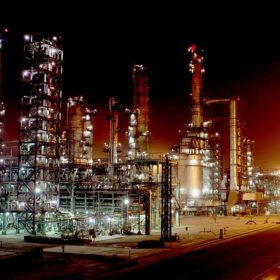
India’s largest industrial carbon capture and utilization project
Indian Oil aims to capture carbon dioxide from hydrogen generation units at its Koyali refinery in the Indian state of Gujarat for enhanced oil recovery at the nearby Gandhar oilfield.

The geopolitical impact of hydrogen
In an interview with pv magazine, Indra Overland, head of the Center for Energy Research at the Norwegian Institute for International Affairs, explains how international hydrogen strategies may play out in the upcoming decades. Plans and roadmaps will not be enough to turn a hydrogen economy into reality and its success will depend on becoming cost-competitive vis-à-vis other solutions in several areas, he says.
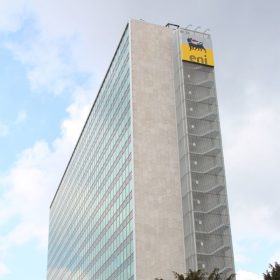
Enel, Eni to build joint 20 MW pilot green hydrogen project
The two Italian energy giants have joined forces to bring online 20 MW of hydrogen capacity between 2022 and 2023. Two 10 MW pilot electrolyzers will be built at unspecified Eni refineries.
IRENA raises carbon price issue in green hydrogen policy guide
Guide to drawing up national green hydrogen strategies acknowledges the global hydrogen economy could fail to take shape if any of the world’s powers decide to stick with fossil fuels to gain a price advantage.
China will need 1.9 TW of solar by 2060 to hit net zero – WoodMac
The bill for full decarbonization of the economy – which is likely to see the decommissioning of no more than half the current coal fleet, with CCS doing some heavy lifting, according to the US-owned analyst – could come in at more than $5 trillion.
