
Brazil tenders 50 MW of battery, solar and hybrid sites for isolated areas
Two lots were tendered, to serve communities in Amazonas and Pará, with BRL 312 million ($58 million) of equipment. In Amazonas, 20,165 MW will be installed via five solar and diesel-fired thermal generation sites. Pará will get a 30.1 MW battery, solar and diesel facility.
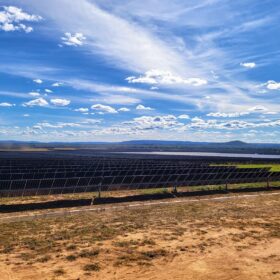
Brazil may add 36.5 GW of solar by 2029, says grid operator
Brazil’s installed solar capacity is expected to rise from 51.7 GW in December 2024 to 88.2 GW by the end of 2029, according to the national grid operator’s 2025–29 Energy Operation Plan.

At least 18 GW of batteries await Brazil’s planned auction
While Brazil is making progress in customer-side, “behind-the-meter” and off-grid battery solutions – with more than 700 MWh – it still lacks guidelines for a planned gigawatt-scale national auction. Markus Vlasits, president of the Brazilian Association of Energy Storage Solutions (ABSAE), tells pv magazine about the nation’s utility-scale battery bottleneck.

Brazil solar imports slow as new China trade routes open
Brazil’s solar imports fell 33% to $722 million in the first four months of 2025 amid project delays and oversupply, as new trade routes began cutting costs and freight times to the country’s North and Northeast regions.

Brazil generates 88% of power from renewables in 2024
Brazil’s electricity mix was 88% renewable in 2024, with wind and solar supplying about 24% of total demand, according to new data from state-owned energy agency Empresa de Pesquisa Energetica (EPE).
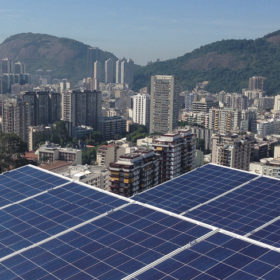
Brazilian government to propose full opening of energy market by 2028 and end of discounts for renewables
The proposed reform of the electricity sector includes the creation of the supplier of last resort, possible flexibility for consumers without contracts and the end of TUST and TUSD discounts for renewable power plants. The plan also imposes a minimum load of 30 MW for self-production by equalization and determines changes in the cost sharing of the sector.

Chinese solar supply issues test Brazilian market amid shifting demand
In a new special, pv magazine Brazil reports on how rising Chinese demand, price volatility and the global tech race are reshaping Brazil’s solar market, with major manufacturers weighing in on supply shifts, pricing and the outlook for storage.
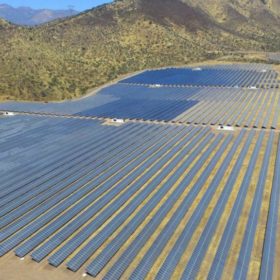
Brazil to add 19.2 GW of solar capacity in 2025
The additions represent marginal growth compared to 2024, according to SolarPower Europe. Last year, the country ranked second in new installations, behind only India (30.7 GW), the United States (50 GW) and China (329 GW). In terms of cumulative capacity through December 2024, the country ranked sixth, with 66.7 GW.
PV module demand in Brazil’s centralized generation market declining after reaching 5.1 GW in 2024
The volume of imported modules was 18% lower than in 2023. After growth in 2024 compared to 2023, installations of large solar plants are expected to face a decline in 2025, with the combination of energy prices close to the floor and worsening curtailment potentially postponing new investments.
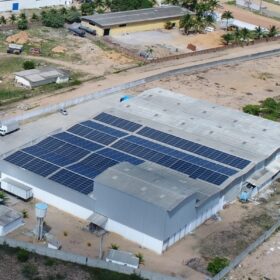
Brazil’s PV capacity hits 55 GW
Brazil has installed 37.4 GW of distributed solar and 17.6 GW of large-scale PV capacity to date.
