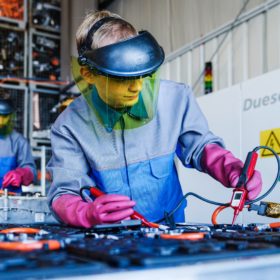
‘Europe’s battery recycling quotas are blunt and a decade too late’
Last week, the European Commission announced it plans to implement sustainability standards for Europe’s growing battery industry. Consultant Circular Energy Storage published a report on lithium-ion battery life cycle and recycling economics this month and its findings ask tough questions of the commission’s proposals.
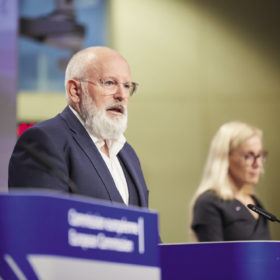
European Commission proposes minimum sustainability thresholds for batteries
The world’s second largest battery market is mulling strict regulation of what type of products can be sold within it. The bloc wants to tighten rules on using hazardous materials and would encourage circular economy approaches. The scope of the commission’s proposal would also affect the design of devices, with phones, laptops and other portable gadgets without removable batteries set to be prohibited.

New method to recover silicon from end-of-life modules
Compared to other techniques based on chemical reactors and organic solvents, the proposed method is said to be able to maintain a “good mechanical yield” in the recovered solar cells. According to its creators, this technique allows the reuse of silicon from the recycled panels in the production of new solar cells.

SolarPower Summit 2020: Policy measures and open-source information key to PV sustainability
Rising volumes of solar capacity are to be welcomed but, as panelists at a session of today’s SolarPower Europe event discussed, the technology must be kept ethical and responsible. That means industry working together; new, harmonized, mandatory and voluntary policy instruments; and a focus on quantifiable, life cycle-based investor criteria.
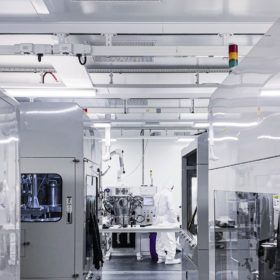
The weekend read: Coming around
Given the number of batteries (primarily lithium-ion) that are required to decarbonize the power and mobility sectors, the industry is now preparing for a mountain of battery waste. Recycling is technically feasible, but is also subject to sensitive economics. The framework in which recycling companies can achieve the best life-cycle costs for batteries needs to be carefully enabled through policy – and it will likely include a mixture of technologies and business models, in order to allow life-cycle emissions of batteries to be brought down.
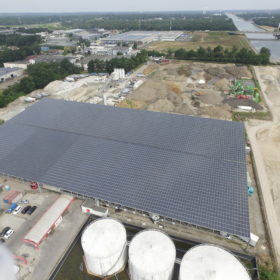
The weekend read: Making solar sizzle
What is circular manufacturing, why is it important, and how is it being applied in the solar and storage industries? pv magazine’s UP initiative investigates.
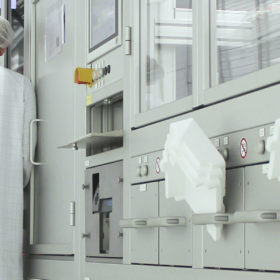
Interview: Designing circular solar modules
Amid a growing appetite for sustainability from customers, Lithuanian solar panel maker Solitek is applying circular principles to its production operations. Measures include embracing digitalization and new approaches to design. Project manager Tadas Radavičius has spoken to pv magazine about the company’s work and how Solitek is supporting European projects which are considering circular solar.

The weekend read: A green road to recovery
In 2019, the European Commission presented the European Green Deal, under which it aims to become climate-neutral by 2050. In May of this year, the commission also unveiled a new instrument to fund the bloc’s recovery from the Covid-19 crisis, in line with the Green Deal principles. This reinforced the drive for renewables investment. pv magazine examines what the latest developments mean for solar.
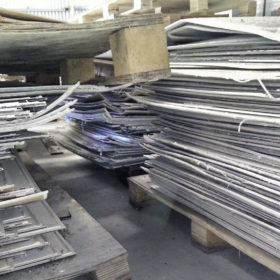
PV module recyclers aiming for high-purity material recovery
France’s National Institute for Solar Energy takes a look at the state of play in the European solar panel recycling industry.

BlackRock vows to exit coal as part of new climate-focused investment strategy
The U.S. asset management fund’s plan to cut future investment in coal is reportedly part of a climate-focused initiative to establish sustainability at the center of its business approach. The announcement comes weeks after the investor closed $1 billion of a record $2.5 billion fund focused on PV, wind and energy storage projects.
