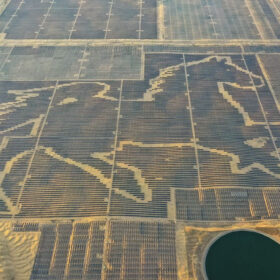
Weekend Read: Famine to feast – China’s solar market in 2023
China’s solar industry rebounded in 2023 after years of pandemic-related sluggishness. As the year draws to a close, pv magazine looks back at key highlights of 2023 and considers the prospects for 2024.

Empirical approach shows PV is getting cheaper than all the forecasters expect
With the consistently unambitious forecasts for solar trotted out by entities such as the International Energy Agency (IEA) now a matter of record, a German risk management company has tried to predict more realistic figures for 2030 and beyond.

The solar module surplus: EUPD Research considers Europe’s warehouse woes
As solar module prices continue to drop to record lows, amid global oversupply, questions are being asked about how much inventory is sitting in European warehouses and when normal levels will return. With numerous estimates and assumptions swirling, EUPD Research’s Markus A.W. Hoehner and Ali Arfa have looked closely at the numbers in an attempt to provide a transparent view of the issue.

Bridging the gaps
The collapse of module prices in 2023 has fueled speculation around just how much PV supply is held in European warehouses. How big the stockpile is depends on who you ask but such a broad spectrum of opinion shows there is room for improvement in how the solar industry shares data.
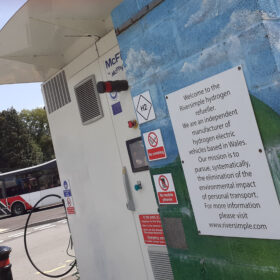
Europe should produce its own green hydrogen
As the cost of generating clean energy continues to fall, producing green hydrogen in Europe, rather than importing it from Africa – with all the transport costs and raised carbon footprint that would entail – is beginning to look like an increasingly viable option.
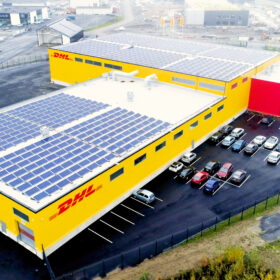
Is the EU doing enough to establish a solar manufacturing supply chain?
Compared to the Inflation Reduction Act (IRA) signed by Joe Biden’s administration in the US, the EU’s approach to establishing solar manufacturing appears slow and lacking in clarity. In this blog post, I will explore the EU’s renewable energy policy, specifically its emphasis on solar manufacturing, and evaluate whether Brussels is doing enough to establish a European solar supply chain.

Technology brings universal access to clean energy within sight
The opportunities available from the aggregation and interpretation of mass data are huge and could help attract investors and ensure more efficient electricity networks as the world races to try and achieve the UN goal of access to reliable energy for all this decade.
Known unknowns
Historic meteorological data is typically used to assess solar farm yield and secure project finance, but with climate change beginning to affect every aspect of society, past weather data may no longer be a reliable guide. Everoze Partner Nastasia Pacaut looks at how PV projects can be future-proofed in a changing climate.

Weekend Read: Japan turns to the rooftop
Japanese policymakers are now looking at rooftop solar panels as land is scarce in the country and agrivoltaics, building-integrated PV (BIPV), and floating solar are still in their infancy, reports Mark Hutchins.
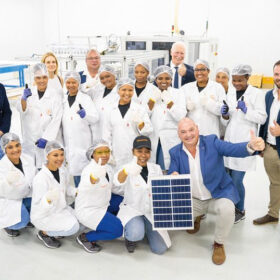
The green jobs promise
Promising to replace fossil fuel jobs with an identical number of clean energy roles in coal-dependent communities is overly simplistic and ignores the fact that communities need to be brought onside with credible expectations of better-quality employment.
