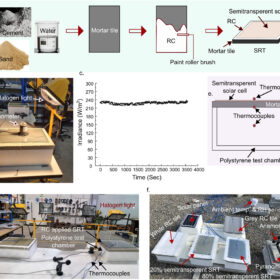
New reflective coating increases BIPV power output by 11%
Australian researchers developed a low-cost reflective coating for semi-transparent solar roof tiles that lowers surface temperatures by up to 20 C and boosts power output by up to 11.7%. Simulations across five global cities showed energy savings of up to 5.85%, highlighting the coating’s strong potential for improving both building cooling efficiency and solar performance in BIPV systems.

Octaspherosilicates-based anti-icing coating for PV systems
Developed by scientists in Poland, the new coating uses transparent silicone-epoxy modified with functionalized octaspherosilicates. The researchers have created five samples, each with a different combination of chemicals, and have found that ice adhesion was reduced by up to 43%, with freezing delay time growing by up to 70 times.

New coating prevents plant growth on underwater solar cells
The US Navy has funded Danish research on preventing biofouling while maintaining visible light transmission on underwater solar cells. The top solution uses ultra-low concentrations of nano-sized, seawater-soluble pigments. Power generation stayed close to 100% after 13 weeks underwater.

Researchers suggest using digested polymers for PV cell coatings, encapsulants
An international research team has proposed to use recyclable biomass-digested polymers as a material for PV coatings and encapsulants. The scientists developed a coating for PV cells that reportedly allows an increase in power output of up to 10%.
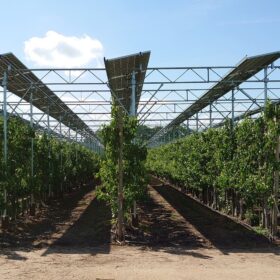
New bifacial agrivoltaic solar panels from Greece
Brite Solar, a Greek specialty module manufacturer targeting the agrivoltaics greenhouse and PV canopy segments, is building a 150 MW production line. Marketing its modules to farming cooperatives, integrators and installers since the end of 2022, Brite solar has pilot installations in North America, Southeast Asia, and Europe. In January it announced raising $9.26 million in venture capital.
New anti-reflective coating for silicon solar cells
Developed by an international research group, the novel anti-reflective coating is based on silicon dioxide and zirconium dioxide. It reportedly minimizes a solar cell’s reflection loss, while enhancing its light absorption properties.
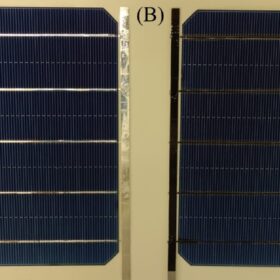
Coating metallic ribbons for aesthetic implementation of BIPV
Researchers in Switzerland have looked into three kinds of black ink coating for metallic ribbons used in PV modules. They have compared their visual stability and their effect on electrical performance.
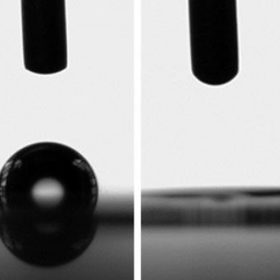
Titanium oxide hydrophobic coating to clean solar panels
Germany’s Fraunhofer FEP has unveiled a dirt-repellent coating for solar panels. The material is reportedly able to acquire superhydrophilic properties at night and wash away the dirt through the beading raindrops.
Hydrophobic nanocoating to reduce soiling in solar panels
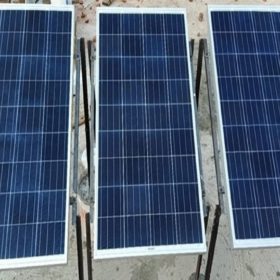
Scientists in Egypt have created a self-cleaning, hydrophobic coating for solar panels that reportedly increases their efficiency by more than 30%. They used a coating solution based on polydimethylsiloxane (PDMS) and silicon dioxide (SiO2) nanocomposites, mixed with ethanol and isopropanol.
New optical coating could extend lifetimes of solar cells
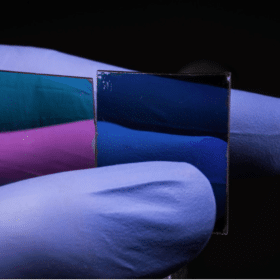
U.S. researchers are collaborating on the development of optical coatings that could extend the lifetimes of PV cells.
