
Commercial solar at grid parity in China but a hard line is needed on soft costs
Deploying commercial and industrial PV in China without subsidy is already profitable in some areas, according to a new study, but prohibitive soft costs and cheap electricity are the main barriers for such installations in areas where grid parity remains out of reach.
Japan proposes 22% commercial solar FIT cut in latest move to trim costs
With the transition to an auction procurement mechanism under way, Japan is this year set to expand the range of projects subject to the tender system from 2 MW-plus to 500 kW and above. With certain FIT cuts for projects with more than 2 MW capacity set to take effect in the second half of the year, the Ministry of Economy, Trade and Industry has now proposed reducing tariffs for 10-500 kW commercial PV systems.
Germany, Italy and Chile are better positioned for grid-parity in DG, study says
The updated version of the “PV Grid Parity Monitor” (GPM) provides an analysis for the commercial DG segment in representative cities of five countries: Germany, Chile, Spain, Italy and Mexico. Germany, Chile and Italy are the countries where good proximity to grid-parity and regulations favoring self-consumption are best combined.
Ontario offers 150 MW of small-scale renewables under FIT round
Solar had the largest share in the final procurement round, with PV developers securing 382 of the 390 assigned feed-in tariff (FIT) contracts. Around 35% of the offered contracts are projects in indigenous communities.
Solar distributed generation make its entry in Lebanon
The French cable maker Nexans has installed a 600 kW rooftop PV array on the factory of its Lebanese subsidiary Liban Cables. The installation if the first project completed under Lebanon’s Small Decentralized Renewable Energy Power Generation scheme.
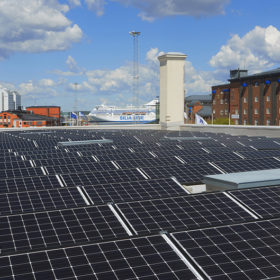
Port of Stockholm resumes commitment to solar energy as Sweden’s solar tax is canceled
Another commercial rootop PV system will be connected at a port’s facility on July 1, the same day in which the cancelation of the solar tax for commercial PV will be removed.

Alberta launches $36 million solar rebate scheme
Rebates can cover up to 30% of the costs for buying and installing a residential or commercial PV system. The program is expected to enable the deployment or around 50 MW of solar capacity.
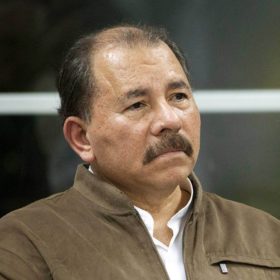
Nicaragua to introduce net metering scheme for distributed generation
While the grid operator Enatrel conducts a feasibility study for solar distributed generation projects, the president Daniel Ortega urges the Parliament to approve the reform of the energy system which will introduce net metering for PV.
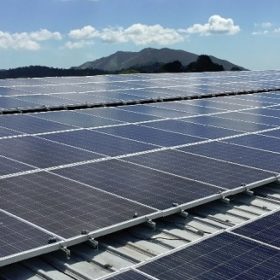
UGE completes acquisition of Carmanah Solar, secures contract for 17 MW solar facility in Alberta
The Canadian renewable energy company has taken full control of the joint venture that acquired the solar unit of Carmanah Technologies Inc. in April. Furthermore, the company has secured a contract to build a 17 MW ground-mounted solar plant near Calgary.
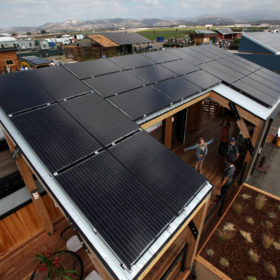
Ontario improves rules for net metering
Under the new rules, which will come into force on July 1, the size limit of 500 kW for power generators installed under the scheme will be removed.
