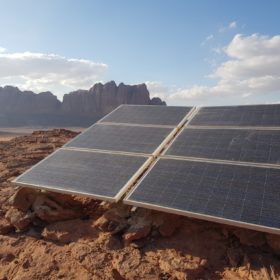
Orange Jordan adds 37 MW of solar under ‘wheeling’ scheme
With grid capacity a limiting factor, the Middle Eastern country has moved to foster private-to-private solar projects to meet industrial power demand.
Total Eren breaks ground on 128 MW of solar capacity in Kazakhstan
The Kazakh solar market is steadily growing amid investment from regional development banks and independent power producers. Total Eren said the 128 MW of generation capacity is just the first of its projects in central Asia.

Scatec Solar secures financing for 55 MW solar plant in Ukraine
With the project, the Norwegian developer has 282 MW under construction and project backlog of 123 MW in Ukraine. The 55 MW Chigirin project will benefit from the generous feed-in tariffs which have secured membership of the gigawatt club for the eastern European nation.
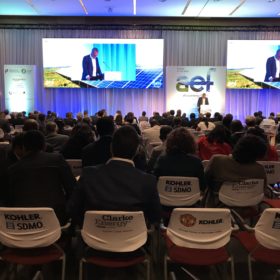
Morocco’s medium voltage PV market will open this year
The nation’s renewable energy legislation will be updated to expand net metering for projects connected to the medium voltage grid, paving the way for a wave of decentralized installations.
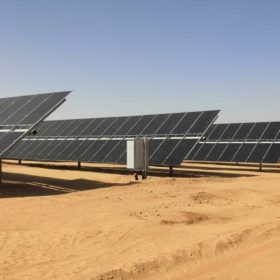
Scatec Solar connects 65 MW to Egyptian grid, proceeds with 33 MW in Mali
Scatec Solar has connected the next part of its 400 MW tracking and bifacial PV plant to the grid in Egypt’s Benban complex. The entire project is set to fully come online throughout the second half of the year. Meanwhile, the company has also secured additional funding for a 33 MW solar project in Mali.

Lebanon’s Tufail region may host planned 500 MW solar plant
The European Bank for Reconstruction and Development is seeking consultants for a feasibility study for the project. The plant would be constructed on land owned by the Banque du Liban.
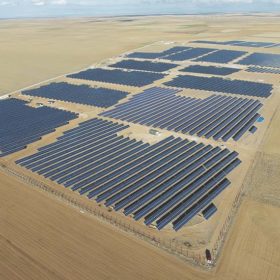
EBRD investment marks further commitment to Turkish renewables
The European Bank for Reconstruction and Development has acquired a $100 million stake in a Turkish renewable energy company as part of its ongoing efforts to diversify clean energy in the country away from hydro power.

Georgia preps 50 MW solar auction
Under the supervision of the European Bank for Reconstruction and Development, the Georgian authorities will identify a site for a 50 MW solar project. Tblisi is also seeking help to define an auction mechanism for renewables.
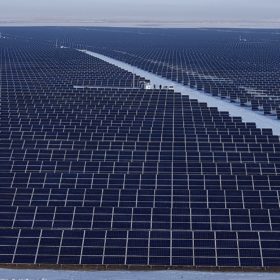
EBRD, Green Climate Fund to help finance 30 MW in Kazakhstan
The international financial institution and the South Korea-based fund have agreed to jointly lend $16.7 million to Chinese developer Universal Energy to build a 30 MWp solar project in the eastern part of the Central Asian country.

Tracking Turkey’s licensed PV market
Turkey’s unlicensed solar market has been the powerhouse of new PV capacity. Given the unlicensed segment is coming to an end, investors are questioning the prospects of the licensed alternative. pv magazine has tracked the progress and future potential of Turkey’s licensed PV market.
