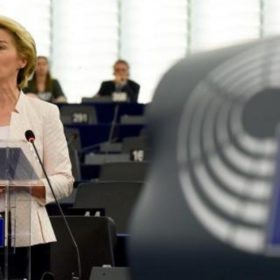
EU climate law sets the stage for a green transformation
Although decried for lacking ambition and as an abdication of responsibility in some quarters, the climate law proposed by the European Commission may be more ambitious than it first appears, as Felicia Jackson, from the center for sustainable finance of the School of Oriental and African Studies at the University of London – considers here.
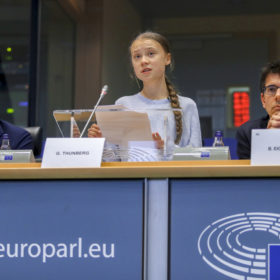
EU Climate Law dubbed a ‘surrender’ by Thunberg and a ‘disappointment’ by trade bodies and politicians
European Parliament groupings, renewable energy associations and climate activists have voiced disappointment at the EU Climate Law officially unveiled yesterday. Lack of a raised emission-reduction ambition to 2030 is at the heart of the opposition, with critics saying the plan will be insufficient to help prevent global temperatures rising more than 1.5 degrees Celsius.
EU climate law: Member states and interest groups demand more ambition
The European Commission today officially presented its Green Deal bill. Though the law has been welcomed in principle by environmental organizations, the provisions are not seen to be ambitious or concrete enough – and 12 EU member states already want to speed up decarbonization.
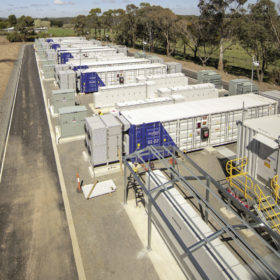
Global energy storage market to surge to 15 GW by 2024
As the sector continues to grow rapidly, delays in manufacturing scale-ups, difficulties sourcing raw materials and a separate path taken by the electric vehicle sector could all chuck ‘sand in the gears’, according to analyst Wood Mackenzie.
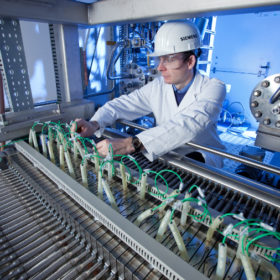
Integrated energy system could see 110 GW of electrolyzers in Germany and Netherlands
A report from Dutch grid operator TenneT and gas business Gasunie suggests the companies should jointly develop infrastructure after 2030. With hydrogen and synthetic methane in demand, electricity and gas will become increasingly inter-linked. Only seamless integration of the two networks would enable the EU to achieve its net-zero-carbon 2050 plan.

SolarPower Europe repeats call for solar strategy as part of European Commission’s €1tn Green Deal
Lobby group CEO Walburga Hemetsberger says the plans announced by commission president Ursula von der Leyen this week should place the European solar industry front and center.
European Commission announces €1tn Green Deal ambition
President Ursula von der Leyen has outlined plans to fund her Green Deal with a mix of EU, member state and private sector contributions. Now it is over to individual nations and the European Parliament.

IFC to help Bangladesh with public-private solar partnerships
The lender’s private sector arm will help formulate a tendering process to identify the best suited partners for the development of PV projects in Bangladesh.
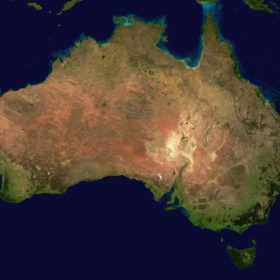
A Green New Deal for Australia?
The cataclysmic bushfire season ravaging the nation is a reminder of the risk climate change poses to Australia’s economic and social prosperity. An international roadmap to freedom from fossil fuels by 2050 produced by the U.S.’ Stanford University says Australia needs another 280 GW of solar and tens of billions of dollars of investment to turn down the heat.
Solar-plus-storage will start to make big inroads in the year ahead
By this time next year we may be able to wave goodbye to that old chestnut about renewables endangering security of supply. Elsewhere, the price of lithium – and the products it goes into – could go either way after tanking this year.
