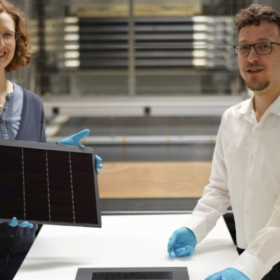
Fraunhofer ISE achieves 34.2% efficiency with III-V germanium PV module
Fraunhofer scientists have announced two efficiency records for III-V tandem modules. The team says its 34.2% efficiency III-V germanium PV module is the most efficient solar module in the world, while its 31.3% efficiency III-V silicon PV module is a record in its class.

Fraunhofer ISE, PTB report just 0.15% uncertainty in PV module yield measurements
An interlaboratory comparison between the CalLab PV Modules of Fraunhofer Institute for Solar Energy Systems ISE and Physikalisch-Technische Bundesanstalt finds the two organizations deviate by less than 0.15% when measuring the performance of photovoltaic modules. The Fraunhofer team says this is one of the most important indications as to whether their analysis is on the right track.

Fraunhofer ISE spin-off launches heat pump information platform
Heat Pumps Watch will work to change consumer attitudes towards heat pump adoption by delivering evidence-based information on the technology aimed at professionals, policymakers and homeowners.

Fraunhofer ISE defining test procedure for grid-forming inverters
The evaluation process, developed in collaboration with four German transmission system operators, has been carried out on seven European companies whose inverters range from kW to MW in size.

A better understanding of UV degradation
Performance loss from ultraviolet (UV) light has become a concern for new PV cells, though earlier lab tests may have overstated the issue. Paul Gebhardt, photovoltaic module reliability scientist at Fraunhofer Institute for Solar Energy Systems (ISE), outlines a mechanism that may have distorted earlier results.

Fraunhofer ISE developing InP-on-GaAs substrates for III-V solar cells
Fraunhofer ISE researchers say their newly fabricated gallium arsenide substrates (InP-on-GaAs wafers) can replace prime indium phosphide wafers and offer a scalable pathway to lower costs.
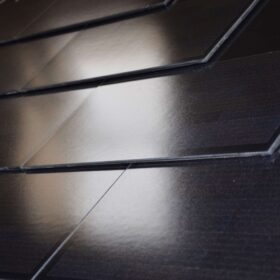
Fraunhofer ISE and Freesuns launch PV roof tile pilot line
The flexible, automated production allows Swiss project partner Freesuns to produce its newly developed matrix shingle roof tiles on a pilot scale before moving into mass production.
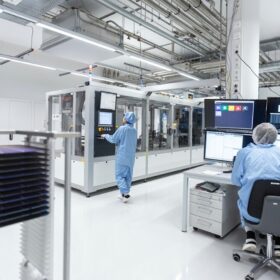
Fraunhofer develops contactless method for measuring back-contact solar cells
Scientists at the Fraunhofer Institute for Solar Energy Systems ISE have developed a contactless method to measure the performance of back-contact solar cells, enabling in-line assessment of key parameters such as efficiency, fill factor, and current-voltage characteristics.
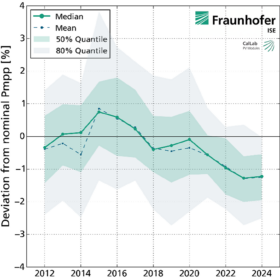
Fraunhofer ISE research finds solar module output ‘often overstated’
A longitudinal research project from the Fraunhofer Institute for Solar Energy Systems ISE reveals that since 2017, the institute has measured less power on average in a solar module than promised by the manufacturer.
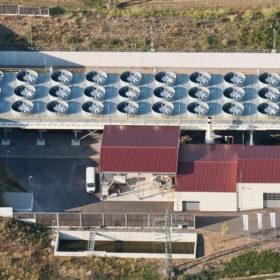
Fraunhofer ISE developing lithium extraction processes in Germany
The ThermIon project is intended to take into account the entire process chain from the pretreatment of the brine to lithium extraction and lithium carbonate or lithium hydroxide crystallization to the controlled return of the brine. The new process is intended to be both environmentally friendly and economical.
