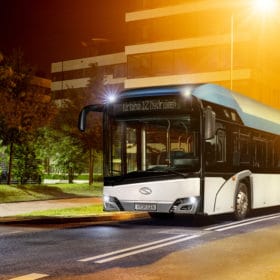
The Hydrogen Stream: Massive hydrogen/green ammonia project in Chile, hydrogen atlas for Germany
Furthermore, Canadian integrated energy company Suncor and Canadian holding company ATCO are looking into a potential “world scale clean hydrogen project” in Alberta, and Japanese energy company Eneos and Japanese multinational automotive manufacturer Toyota Motor, are exploring hydrogen applications at Woven City, a prototype city in Japan.
The Hydrogen Stream: 20 MW electrolyzer in Spain, hydrogen alliance between Russia and Germany
BP, Iberdrola and Enagás will power a 20 MW electrolyzer with 40 MW of solar in Spain. Automotive manufacturers Hyundai, Stellantis, Toyota and BMW sent a letter to European Commission Vice-President Frans Timmermans asking to support the continued expansion of a 700 bar hydrogen refuelling network in Europe.

The Hydrogen Stream: Offshore hydrogen pipeline and more electrolysis capacity in Germany
Big German conglomerates such as Siemens, RWE and Vattenfall keep pushing for green hydrogen development through different projects. Germany’s first offshore hydrogen pipeline is being planned by RWE itself, Shell, Gascade and Gasunie, and should be commissioned in 2035. Siemens is planning hydrogen projects in the 5 MW to 50 MW range, for industrial and mobility applications.
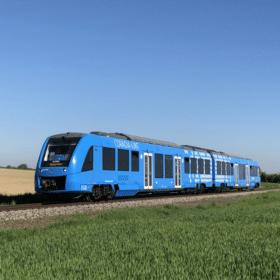
The Hydrogen Stream: Alstom moves forward with world’s first hydrogen train, Chile seeks proposal for hydrogen projects
French train manufacturer Alstom said that its Coradia iLint train is now ready for commercial deployment and the Chilean government launched a call for green hydrogen projects. Furthermore, several developments for fuel cell electric vehicles were announced.
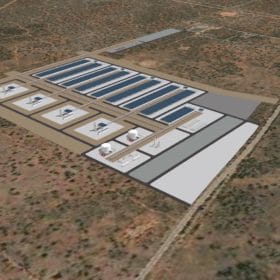
The Hydrogen Stream: 39,700 km European hydrogen network planned, Germany means business
Several heavyweights in Germany have announced projects to move forward with green hydrogen. RWE, Uniper and Bosch have all announced large-scale projects and the German government has allocated €52 million for hydrogen research. The European Hydrogen Backbone (EHB) initiative is proposing a hydrogen network of 39,700 km by 2040, with further growth expected after 2040.
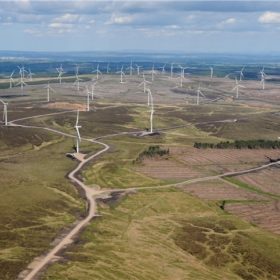
The Hydrogen Stream: EU launches call for low-carbon hydrogen tech, Netherlands unveils €338m plan
Furthermore, Michelin said it wants to become a world leader in hydrogen fuel cell systems and ScottishPower aims to build a green hydrogen plant at a wind power complex. Moreover, a study led by scientists at the U.S. Department of Energy’s (DOE) Argonne National Laboratory suggested new strategies to design perovskite materials to speed up the oxygen evolution reaction (OER), a process that frees up molecular oxygen from water and is key for hydrogen production.
The Hydrogen Stream: Siemens targets $1.50/kg by 2025, BP and Saudi Aramco bet on blue hydrogen
The German company expects to roll out its in-house proton exchange membrane (PEM) electrolysis technology to implement a gigawatt production of electrolyzers. BP partners with UK gas distributor Northern Gas Networks (NGN) to develop blue hydrogen and Saudi Aramco teams up with Hyundai Heavy Industries to do the same. Italy’s Snam wants to build hydrogen projects in the United Arab Emirates.
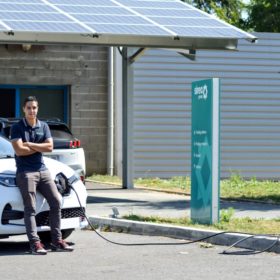
EV recharging station powered by solar, hydrogen
The recharging station was designed by French automation group Sirea. It is powered by a solar carport and a small electrolyzer.
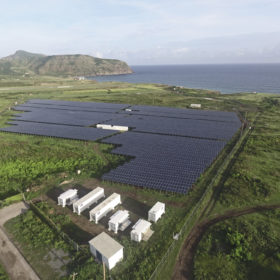
New method to build microgrids based on solar, hydrogen
The use of polymer electrolyte membrane fuel cells as backup power generation in solar microgrids could drive down costs and improve efficiency, according to an international group of researchers. They have proposed a new energy management system that could be ideal for hybrid solar-hydrogen microgrids in remote locations.
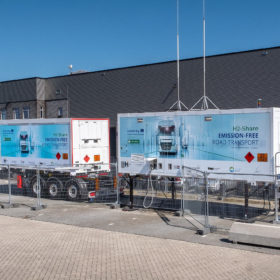
Hydrogen to go
German company Wystrach has developed a 350-bar hydrogen refueling station for heavy duty vehicles which can be installed anywhere.
