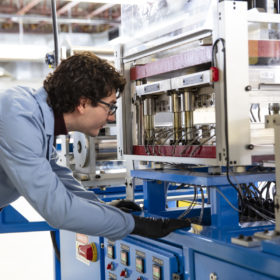
The Hydrogen Stream: Reclaimed carbon fiber bipolar plates may increase fuel cell capacity by 30%
Boston Materials and Arkema have unveiled new bipolar plates, while US researchers have developed a nickel and iron-based electrocatalyst that interacts with copper-cobalt for high-performance seawater electrolysis.
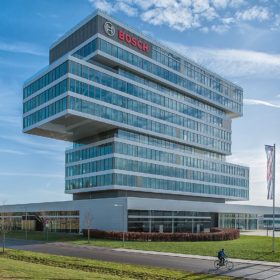
Bosch invests €500 million to develop hydrogen electrolyzers
Germany’s Bosch wants to focus on green hydrogen production in Europe as a new dedicated business area. It said it will draw on its fuel cell expertise to build new productions facilities.
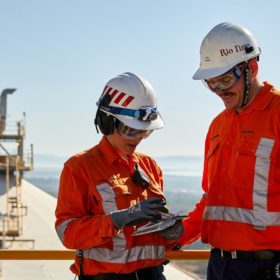
Sumitomo, Rio Tinto to build green hydrogen project in Australia
Japan’s Sumitomo Corp. has revealed plans to build a green hydrogen pilot plant at Rio Tinto’s Yarwun alumina refinery in the Australian state of Queensland.
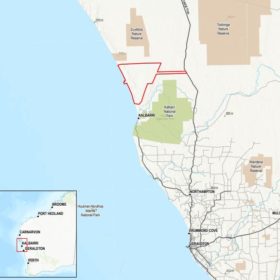
Western Australia to host green hydrogen project powered by 5.2 GW of wind, PV
Investors have applied for an environmental assessment for about 5 GW of wind and solar in Australia, which will support plans to produce green hydrogen and ammonia at a massive new facility.
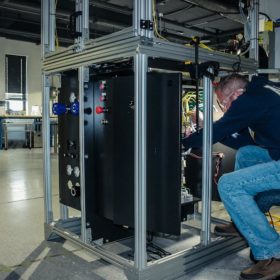
US startup claims hydrogen output for $0.85/kg or less via new water vapor electrolyzer
Advanced Ionics has developed an electrolyzer that runs at temperatures below 650 C. It is reportedly able to produce hydrogen for $0.85/kg or less. CEO Chad Mason recently spoke with pv magazine to provide a closer look at the water vapor electrolysis tech.
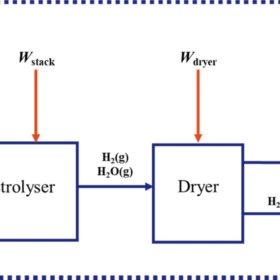
The Hydrogen Stream: High-pressure PEMEL electrolyzers for lower hydrogen costs
Elsewhere, Lotte Chemical and Air Liquid Korea will establish a joint venture to build a hydrogen supply chain in South Korea and the US Department’s Loan Programs Office (LPO) offered a conditional commitment for a US$504.4M loan guarantee to the Advanced Clean Energy Storage Project in Utah, which combines alkaline electrolysis with salt cavern storage for grid scale energy conversion and storage using hydrogen as the energy carrier.
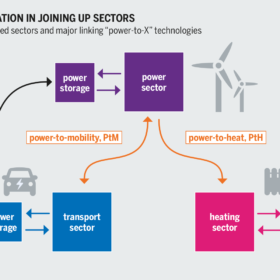
Techno-economic analysis of renewables-driven power-to-X processes
Researchers at the University of Genoa have conducted a techno-economic analysis to assess green hydrogen produced via water electrolysis and its conversion into three alternative fuels – methane, methanol, and ammonia. They looked into efficiency, storage capacity, annual costs, and production costs of the different fuels, which they found to be significantly higher than market reference values.
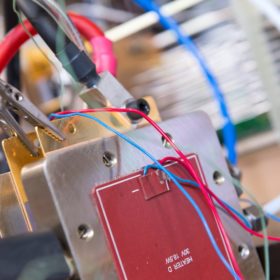
The Hydrogen Stream: Fuel cell that uses iron instead of expensive platinum
In other news, Hydrofuel Canada developed hollow hybrid plasmonic nanocages to create an electrocatalyst for ammonia synthesis from nitrogen (N2) and water (H2O) and said green hydrogen could be separated from this ammonia and sold at about $1.50 per kilogram. Furthermore, Norway’s Aker Horizons and Statkraft are exploring green hydrogen and ammonia production opportunities in India and Brazil, targeting local steel and fertilizer industries.
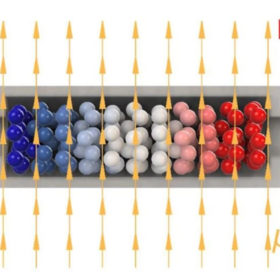
The Hydrogen Stream: Magnetic alloys for efficient hydrogen cooling
While a Japanese team developed a series of Er(Ho)Co2-based magnetic cooling alloys for hydrogen cooling, a US research team used a “simple” acid treatment to increase flow of hydrogen atoms within protonic ceramic electrochemical cells (PCECs). Hydrogen-fuelled mobility registered significant developments: the first hydrogen-electric passenger aircraft was piloted between two major airports in Germany, and a 75-passenger ferry service in the San Francisco Bay braces for operations in June.
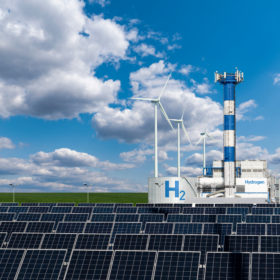
Dutch energy provider Essent uses photovoltaics to produce hydrogen
The hydrogen generation facility will be initially powered by a photovoltaic plant, but Essent may also add wind power for periods when the sun is not shining. The energy company also plans to deploy some battery storage capacity at the plant for the temporary storage of the surplus of solar power that cannot be immediately converted into hydrogen or supplied back to the grid.
