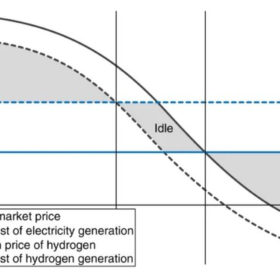
Reversible fuel cells for backup power generation
Reversible fuel cell systems based on solid oxide cell (SOC) technology may become an efficient tool to cope with price volatility in the energy market, according to new research from Stanford. Through the proposed model, which mainly considered the electricity markets in Germany and Texas, the research group found that the reversible system may be competitive at current hydrogen prices, provided that there is sufficient variation in daily electricity prices.
Green ammonia low-hanging fruit for India’s hydrogen economy
A new report from IEEFA says green ammonia could help India significantly reduce its trillion-rupee fertilizer subsidy bill and cut dependence on liquefied natural gas (LNG) imports for fertilizer production.
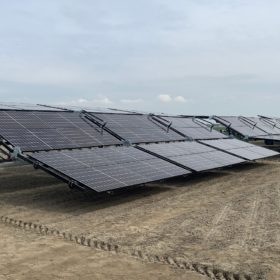
Mobile agrivoltaic system from the Netherlands
Created by a Dutch group of companies and research institutions, the mobile solar system may also be combined with an electrolyzer for hydrogen generation. Two prototypes are currently being tested by a farmer and a research institute in the Netherlands.
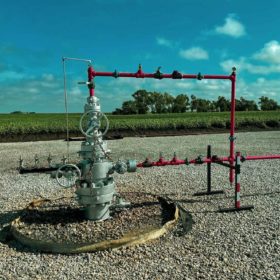
Natural hydrogen – how it works and why companies are interested
Natural hydrogen is piquing interest. Sometimes referred to as “gold” or “white” hydrogen, natural hydrogen plants offer smaller carbon footprints than sprawling green hydrogen projects, with faster development times, according to Avon McIntyre, executive director of HyTerra.
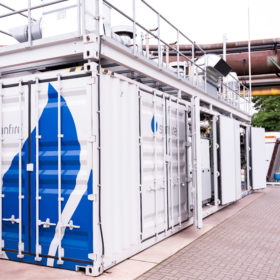
The Hydrogen Stream: Salzgitter claims record efficiency for largest high-temperature electrolyzer
Salzgitter has claimed a record efficiency level for its EU-funded GrInHy2.0 hydrogen project, which is based on solid oxide electrolysis cell tech. The high-temperature electrolyzer uses waste heat from the company’s steel production processes.
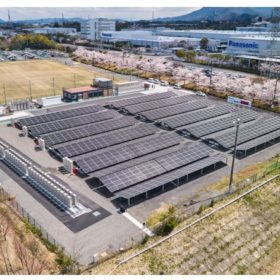
Panasonic combines fuel cells, batteries, PV to power factory in Japan
Japan’s Panasonic claims its new pilot solar-plus-hydrogen facility marks the first attempt to create a factory powered by 100% renewables, via the full-scale use of hydrogen.
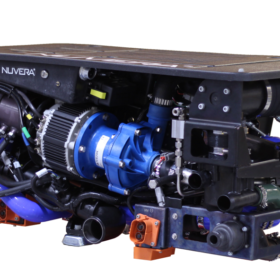
The Hydrogen Stream: Fuel cell engines for stationary power uses
In other news, Airbus and Kawasaki Heavy Industries plan to work together to prepare a hydrogen-fueled ecosystem, while Storgrundet Offshore and Lhyfe want to build a 600 MW hydrogen production plant in Sweden. Furthermore, Canada-based First Hydrogen has identified four industrial sites in the United Kingdom and is advancing discussions with landowners to secure land rights to develop green hydrogen production projects.
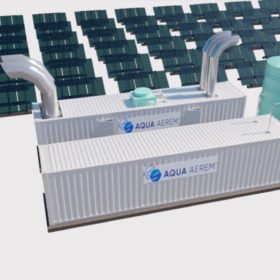
Massive Australian green hydrogen project moves forward with new Japanese partner
Water-from-air technology company Aqua Aerem’s Desert Bloom green hydrogen project received Major Project Status from the Northern Territory government last year. It has now announced a partnership with Japanese energy giant Osaka Gas that not only brings the 10 GW project closer to reality, but has also seen the company boost its ambitions to 20 GW in light of “quickly developing demand.”
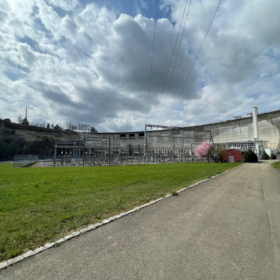
Hydro-powered hydrogen production in Switzerland
Groupe E will build an $8.5 million hydrogen production facility in the Swiss canton of Fribourg, featuring two polymer electrolyte membrane (PEM) electrolyzers provided by H-Tec Systems.
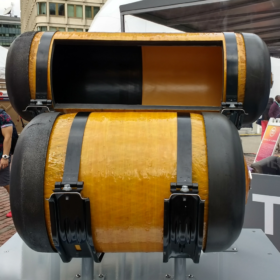
UK government warns of global warming risks related to hydrogen leaks
The UK Department for Business, Energy and Industrial Strategy has published new research showing that hydrogen leaks could have an indirect climate-warming impact, partly offsetting efforts to reduce carbon dioxide emissions.
