Solar may cover 75% of global electricity demand by 2050
A new study from the Lappeenranta University of Technology predicts solar may even achieve a 69% share for total primary energy supply by the end of the first half of the century. In terms of price, solar PV is expected to achieve a capex of €246/kW-installed for utility scale projects, and of €537/kW for residential arrays by 2050. The levelized cost of energy (LCOE), however, is expected to remain constant over the next three decades, as the energy transition will also be implemented with storage technologies, increased flexibility and the production of synthetic fuels.

The Hydrogen Stream: strong push from France, new plans and deals in UK, Italy, Brazil, Philippines, Saudi Arabia, Portugal
The nascent hydrogen economy has seen a good amount of developments in a week that showed an increasing number of players taking part in the game. In the UK, British Airways has invested in hydrogen-electric aircraft developer ZeroAvia with a focus on hydrogen-electric power solutions for 50-plus-seat aircraft. In Brazil, Petrobras has joined forces with Siemens to develop green hydrogen solutions. In Portugal, the government and the European Investment Bank signed a non-binding memorandum of understanding for hydrogen cooperation.
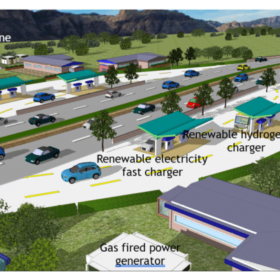
Solar powers novel green hydrogen fuel technology
A homegrown technology developed by the University of Newcastle and Southern Green Gas has seen the development of a novel green hydrogen fuel and carbon-neutral green methane. The fuel was demonstrated in Hyundai’s Nexo hydrogen fuel cell SUV in Sydney.

Work begins on green hydrogen storage cavern in Sweden
Vattenfall, SSAB and LKAB are building a rock cavern storage facility in a coastal city in northern Sweden. The 100-cubic-meter facility will be built 30 meters below ground and will begin storing green hydrogen next year.
Solar PV driving green hydrogen to undercut gas, says BloombergNEF
BloombergNEF has shown that solar PV is the key driver of declining green hydrogen costs. The forecast shows costs falling by 85% by 2050, undercutting natural gas and blue and gray hydrogen production.

Egyptian government signs deal to buy power from 200 MW of Kom Ombo project
Saudi power company ACWA Power today revealed it has signed a 25-year power purchase agreement with the Egyptian Electricity Transmission Company and said development was on track for generation to start before October next year.
Chinese PV Industry Brief: Longi expands into hydrogen, Eging PV secures 280 MW order
Monocrystalline module manufacturer Longi is venturing into new territory but missed out to its rival on two big panel orders from a state-owned power company.
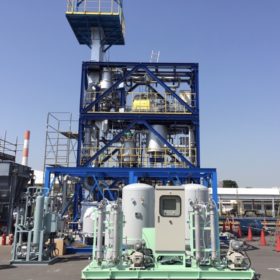
The Hydrogen Stream: Projects move forward in China, Japan, Australia and across several European countries
Sinopec wants to build 1,000 hydrogen refueling stations by 2025. Ways2H is building a facility in the Tokyo area that will convert daily 1 ton of dried sewage sludge into 40-50 kilograms of hydrogen for fuel cell mobility and power generation. Ørsted wants to deploy two renewable hydrogen production facilities for a total of 1 GW by 2030. Wacker Chemie is planning to produce green hydrogen and renewable methanol at its German site.
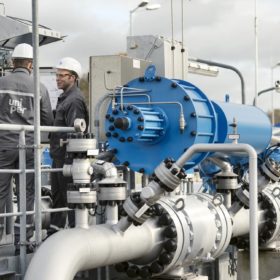
What will African nations require to produce competitive green hydrogen exports?
A robust national strategy, a portfolio of renewable energy assets, public subsidies and, ideally, existing gas pipelines will all favor African nations aiming to become exporters in the energy storage medium, participants heard at a recent two-day green hydrogen conference.
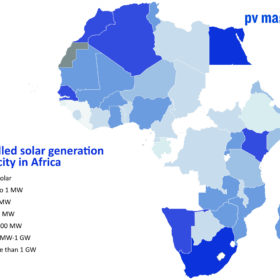
African green hydrogen could feed German and Japanese industry and water drought-stricken nations
Trade bodies the Africa Solar Industry Association and the African Hydrogen Partnership hosted a two-day virtual conference to discuss the role green hydrogen can play in economic growth across the continent–and how it could drive desalination in freshwater-starved coastal countries.
