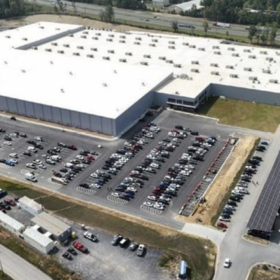
Qcells secures $1.45 billion of DoE support for solar plant in Georgia
The US Department of Energy (DoE) has finalized a $1.45 billion loan guarantee to Hanwha Qcells to support its solar plant in the state of Georgia. It aims to rebuild key parts of the US solar supply chain by manufacturing ingots, wafers, cells and solar modules.
How will PV’s intellectual-property scuffles shake out?
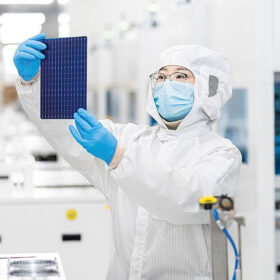
Lawyers are doing brisk business as tunnel oxide passivated contact (TOPCon) solar technology moves into the mainstream. A series of patent infringement cases have been launched in the United States and Europe and their impacts are reverberating through the marketplace. How likely is it that winners will emerge?

US Patent Trial and Appeal Board rules in favor of Q Cells in patent dispute with REC
The US Patent Trial and Appeal Board has issued a favorable decision for Hanwha Q Cells over REC Solar’s patent claims. The court has ruled that the contested claims of REC’s US patent were not patentable. The decision is similar to those in courts in China and Europe, according to Q Cells.
Q Cells announces $2.5 billion investment in US solar supply chain
Q Cells plans to manufacture 3.3 GW of solar ingots, wafers, cells, and finished modules in a new facility in the US state of Georgia.

German court rules in favor of Q Cells in patent dispute with Trina Solar
A German court has issued a preliminary injunction ordering Trina Solar to stop selling its Honey and Vertex X solar modules in Germany, as they allegedly infringe upon the patented passivation technologies of Hanwha Q Cells.

Qcells, European consortium launch production line for tandem silicon-perovskite solar cells
South Korea-based Qcells and a research group led by Helmholtz-Zentrum Berlin (HZB) have established a pilot manufacturing line for silicon-perovskite tandem cells in Thalheim, Germany. The project aims to speed up the technology’s mass manufacturing and market penetration.

Q Cells, Enphase launch AC module
The module manufacturer and micro-inverter supplier will connect their products in the factory to reduce installation costs, while providing a list of value propositions for micro-inverters.
