
REC Group mulls French module gigafactory
The Norwegian solar manufacturer is considering a 2 GW heterojunction solar module factory in Sarreguemines, in the northeast of the country.

Talesun to bet big on advanced technologies
Chinese solar manufacturer Talesun has announced plans to raise up to $226 million to expand PV cell and module production capacity by up to 2 GW, with a focus on heterojunction and TOPCon technologies.

Change at the top for Meyer Burger after €37m loss
The Swiss PV equipment supplier posted the loss for 2019, citing increasingly fierce competition in China, and plans to continue a strategic realignment of its business with the options including the establishment of a European PV manufacturing operation.

A perovksite-silicon tandem cell with 25.7% efficiency
The device exhibited a small performance loss after a 400-hour thermal stability test at 85 degrees Celsius and after the same period under maximum power point tracking at 40 degrees Celsius, according to its developer. The cell was made by combining solution-processed, micrometer-thick perovskite top cells with fully-textured silicon heterojunction bottom cells.

Chinese giant doubles down on cell production expansion
The 5 GW of new production lines announced by JA Solar at the start of the year have now been doubled as the company also unveiled plans to rejig up to 3.6 GW of its existing facilities to accommodate bigger wafers.
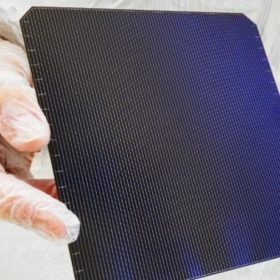
French solar institute and Enel announce 24.63% efficiency for heterojunction solar cell
The efficiency of the cell, made with a standard M2 wafer, was raised around 0.7% by using an improved busbar-free screen printing metallization process based on heterojunction processes developed with manufacturing equipment provided by Swiss specialist Meyer Burger.

Kaneka tests bifacial heterojunction modules in Japan
The Japanese chemical company has supplied panels for a PV system on the roof of a 7-Eleven store in Kanagawa prefecture.
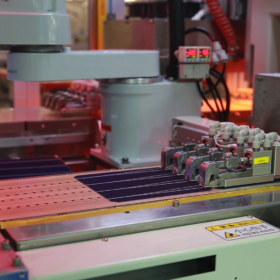
Hanergy hits 25.11% efficiency with HJT cell
The Chinese thin-film manufacturer has achieved 25.11% efficiency with a full size silicon heterojunction cell, beating its own record. The efficiency record has been confirmed by Germany’s Institute for Solar Energy Research Hamelin.
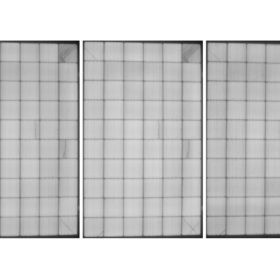
New metallization tech to reduce microcracks in solar cells
A U.S. research group has developed a metal-carbon-nanotube composite – MetZilla – which can be embedded in commercial, screen-printable silver pastes and is said to reduce the formation of hotspots in solar modules and to prolong panel lifespan. The composite metal contacts are also ‘self-healing’ as they are able to regain electrical continuity after cycles of complete electrical failure caused by extreme strain.
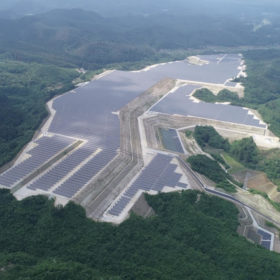
Solar sales recover for electronics brands LG, Kyocera and Panasonic
Korean conglomerate LG reports increasing demand for its high-efficiency PV products in key markets while Kyocera said its solar business is improving profitability. Panasonic posted a slight increase in sales for its PV segment, including solar manufacturing.
