Meyer Burger resists rebel shareholder at EGM
The Swiss solar equipment supplier today fought off an attempt by its largest single shareholder to have a representative appointed to its board and to have its executive pay regime reviewed. Victory in that battle may secure the company some wiggle room, but the war over corporate strategy appears far from over.
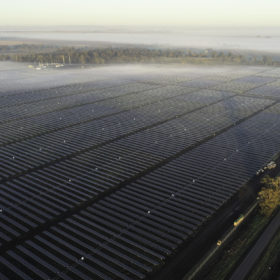
Risen profits for HJT manufacturer
Ukraine’s favorite solar module manufacturer has posted another encouraging set of returns, after a difficult year in 2018. And Risen – which boasted 6.6 GW of annual production capacity at the end of last year, according to analysts at PV InfoLink – is committed to adding another 2.5 GW before 2022.
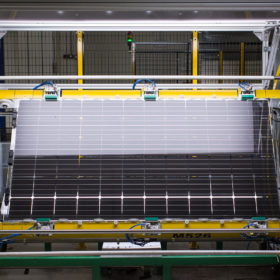
Enel kicks-off production at Italy’s heterojunction module factory
The manufacturing facility, idled a few years ago, will produce bifacial modules. The company claims panel efficiency exceeds 20.5% and the factory has an annual production capacity of around 200 MW.
The weekend read: Next steps for HJT
There is movement in the heterojunction space, but will it be enough to surpass PERC’s momentum? New production lines show promise, but they might also be the last roll of the dice for Swiss production equipment supplier Meyer Burger.

A common language for bifacial PV
This week pv magazine was in Amsterdam for the sixth edition of the BifiPV workshop, where the discussion focused on the impressive achievements made by bifacial solar modules and the challenges the technology faces as it moves toward mainstream adoption.
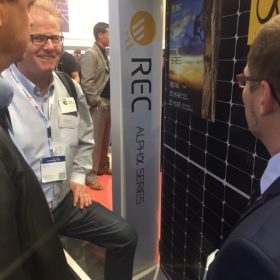
Meyer Burger abandons plan to relocate operations to China
The Swiss equipment maker is instead preparing to commit its future to PV in its European heartland and will start with plans to help Norwegian module maker REC Solar embark on a gigawatt-scale production expansion.
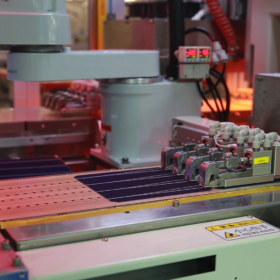
Hanergy sets new efficiency record for heterojunction cell
Chinese thin film producer Hanergy has set a new record of 24.85% module efficiency for silicon heterojunction technology. The record was achieved at the company’s research & development center in Chengdu, China, and has been confirmed by the Institute for Solar Energy Research in Hamelin, Germany.
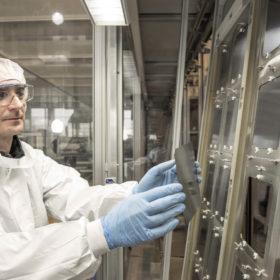
Oxford PV orders 100 MW production line from Meyer Burger
The British-German perovskite startup has ordered a turnkey 100 MW silicon heterojunction solar cell line from the Swiss PV equipment supplier. The terms of the deal were not disclosed.
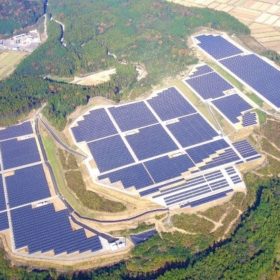
Japanese giants have solar operations on the down-low
Panasonic offloaded some of its PV interests to Chinese HJT cell maker GS-Solar and Kyocera is advertising further savings from its solar operations but neither business unit acted as a significant drag on wider group figures.
Meyer Burger seals $100 million HJT order, expects to hit break-even in first half
Swiss equipment supplier Meyer Burger has signed a contract to supply heterojunction cell manufacturing equipment to an unnamed North American manufacturer. The company also posted its preliminary results for the first half, posting a $14 million EBITDA loss but stating it expects to break even for the period after selling its wafer business.
