
Hybrid fuel cell-battery storage system for solar applications
Scientists in Thailand have built a hybrid system based on a 3 kW fuel cell and a 50 kWh lead-acid battery that is intended for storing solar power. They also sought to identify the best DC coupling voltage between the two devices in order to optimize their combined performance.
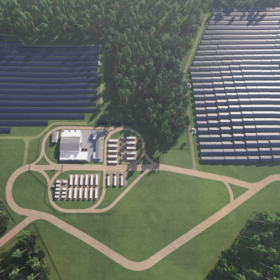
Large scale solar-plus-hydrogen project secures 25-year PPA in French Guiana
The PPA was awarded by French utility EDF. The facility relies on a 55 MW solar unit, a 16 MW electrolyzer, storage tanks and 3 MW of fuel cells.
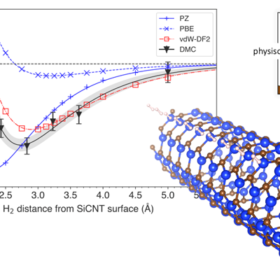
Storing hydrogen with silicon-carbide nanotubes
Storing hydrogen in carbon nanotubes and other nanostructures is still far from reaching commercial maturity. A Japanese research team, however, has developed a new simulation technology that may help better estimate the energy needed to favor the ideal interaction between hydrogen and its storage material.
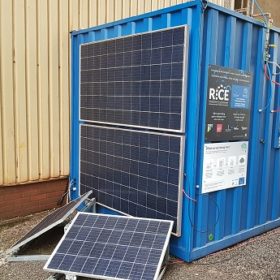
The Hydrogen Stream: Mongolia’s potential for producing green hydrogen at $3.30/kg
A German research group has identified Mongolia’s South Gobi region as an ideal location for the production of cost-competitive green hydrogen. Elsewhere, the U.K. is seeing more on and offshore-powered renewable hydrogen projects.
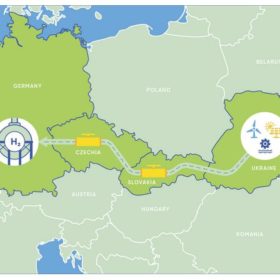
The Hydrogen Stream: Hydrogen highway through Central Europe
Elsewhere, the German government wants to allow the testing of hydrogen production from offshore electricity, while a French consortium intends to promote the use of hydrogen at airports and build a European airport network to accommodate future hydrogen aircraft. Furthermore, the Port of Rotterdam is increasing its efforts to become a hydrogen hub.

Australian developer secures approval for 1 GW green hydrogen and battery project
Renewables developer Edify Energy has been granted development approval to build and operate a green hydrogen production plant of up to 1 GW, as well as a behind-the-meter solar and battery storage facility within the Lansdown Eco-Industrial Precinct in Townsville, northern Queensland.
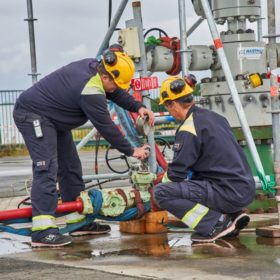
Dutch gas giant begins storing hydrogen in underground salt cavern
Operated by Gasunie, the underground storage facility is located near Veendam in the province of Groningen and should be fully operational in 2026. Tests will be run until spring 2022.
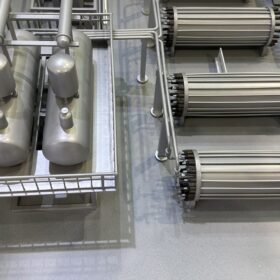
Australian scientists seek to verify tech claimed to improve hydrogen fuel cell efficiency by 60%
From pv magazine Australia Queensland’s University of Technology (QUT) is working on verifying Titan Hydrogen’s claims its patent-pending technology will “effectively double” vehicles’ driving ranges by enabling a fuel cell to produce more electricity from the same amount of hydrogen. The Australian-based company claims its technology could increase the capacity of fuel cells by up […]
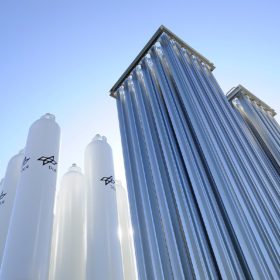
PV-generated hydrogen cost projected to drop to €0.7 and €1.8/kg by 2030
Green hydrogen cost may reach between €0.7 and €1.8/kg by 2030 and €0.3 and €0.9/kg by 2050, according to a European research team led by the European Technology and Innovation Platform for Photovoltaics. The scientists found that the levelized cost of hydrogen (LCOH) could drop from around €0.031-0.081/kWh currently to €0.02-0.05 by 2030 and €0.01-0.027 by 2050.
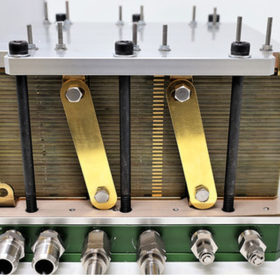
The Hydrogen Stream: New fuel cell tech for uncrewed ships, and a solar-powered hydrogen valley in southern Italy
A printed circuit board-based hydrogen fuel cell for use in autonomous boats and ships has been engineered by a British consortium, and Italian energy companies Snam and Edison want to set up a 220 MW green hydrogen production plant powered by 380 MW of solar in Apulia.
