
Italian stock exchange suspends trading of Enertronica shares
The Italian developer and largest shareholder of inverter maker Elettronica Santerno, said on Friday it would delay its financial results for the first half. Its statement also revealed the loss of a contract to build a 120 MW solar plant in Spain and a $5 million loss linked to another project in the US.

SMA closes first half of 2018 with higher earnings and revenue
The company reports having shipped 4.3 GW of PV inverter capacity, which marks a significant year-on-year increase. While revenues increased slightly, net income improved by a higher margin.

SolarEdge extends patent infringement lawsuit against Huawei
Following the claim filed in June, SolarEdge now alleges Huawei has infringed two more of its patents. With its HD-wave inverter topology the subject of the first lawsuit, the Israeli manufacturer now says its Chinese rival also copied its power optimizer technology.

Italy’s Fimer enters string inverter business, plans stock exchange listing
In an interview with pv magazine, managing director of the Italian central inverter specialist, Filippo Carzaniga discusses the company’s new strategy, explains the reasons for the listing. After delivering 1.5 GW of inverters in 2017, Fimer hopes to increase its shipment volume by around 10% this year, to between 1.6 GW and 1.7 GW.

GT Advanced Technologies opens silicon carbide factory in New Hampshire
The upstream technology company plans to sell silicon carbide for applications including advanced inverters for solar and battery storage, as part of a new emphasis on materials supply.
SMA confirms guidance for 2018
In the first quarter, SMA saw its sales increase slightly, while EBITDA improved compared to the same period of the previous year. Net profit, however, was significantly below the level of the first quarter of 2017.

Sungrow plans 3 GW inverter fab in India
Sungrow, the world’s second largest inverter supplier, according to GTM research, has announced plans to establish production facilities in India. The Chinese inverter company is aiming to strengthen its global delivery capability by setting up central and string inverter facilities in the state of Karnataka. The fab would be its first outside of China.
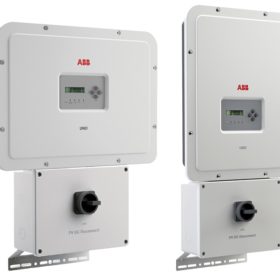
ABB taps Tigo for MLPE solution across its residential inverter range
The Swiss power electronics giant has announced that its UNO-DM-PLUS string inverters are now operationally compatible with Tigo’s DC optimization technology, which also offers module-level monitoring and rapid shutdown capability.
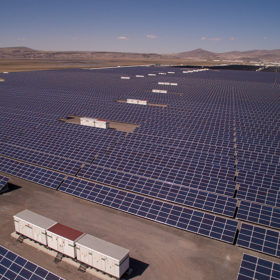
Record inverter shipments in 2017, three-phase string inverters overtake central for first time
According to the latest GTM Research statistics, global inverter shipments increased 23% in 2017, and revenues 11%, thus representing another record year. A market first, three-phase string inverter shipments overtook those of central inverters.

TÜV Rheinland exposes inverter, battery hacking vulnerabilities
Testing from TÜV Rheinland has revealed that PV inverters and battery storage systems are vulnerable to hacking. By changing system parameters, a hacker could potentially cause a battery system to corrode, “making it like a ‘bomb’.”
