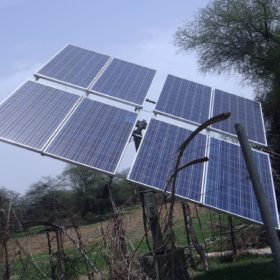
Aid organization seeks developers for mini-grids in Ethiopia
The U.S.-based Mercy Corps has opened a call for expressions of interest in the installation of mini-grids at three refugee camps on the Somali border.

Burkina Faso kicks off ‘Solar Cluster’ plan
The West African nation is launching a capacity-building program to create an ‘ecosystem’ of PV and energy-efficiency businesses. The Green Climate Fund is providing access to international finance.
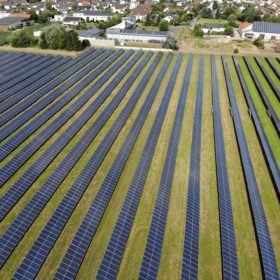
Solar costs have fallen 82% since 2010
The levelized cost of energy generated by large scale solar plants is around $0.068/kWh, compared to $0.378 ten years ago and the price fell 13.1% between 2018 and last year alone, according to figures released by the International Renewable Energy Agency.

Israeli national lottery supports rooftop PV program with $0.12/kWh feed-in tariff
The incentive scheme awards a 23-year, $0.12/kWh feed-in tariff to rooftop arrays with a generation capacity of up to 200 kW. Already, 141 municipalities have applied to install 116 MW of rooftop solar capacity and the government has increased the program’s budget from $28.5 million to $143 million.
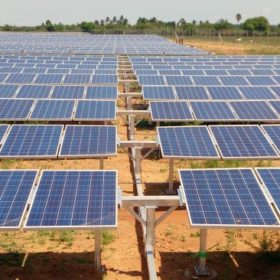
Covid-19 pandemic puts 150 GW of PV, wind at risk in Asia
Up to 150 GW of PV and wind projects could be postponed or canceled throughout the Asia-Pacific region by 2024 if the coronavirus-triggered recession continues beyond the current year, according to new research by Wood Mackenzie.

Covid-19 daily bulletin: Italian PV developers do their bit for the nation
Solar project owners responded to an appeal to donate a portion of their solar incentive payments to the public health authorities as another multinational body emphasized the importance of coronavirus fiscal stimulus packages having environmentally-friendly conditions attached.
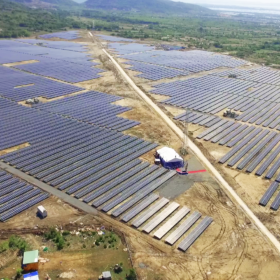
Vietnam finally unveils new FITs for large-scale, rooftop, floating PV
Hanoi has set new feed-in tariff rates for utility-scale, rooftop and floating PV projects, ending a long period of policy uncertainty. The government has announced the new rates, which are broadly in line with industry expectations, roughly 10 months after the expiration of its old tariffs.
World now has 583.5 GW of operational PV
Global grid-connected solar capacity reached 580.1 GW at the end of 2019, along with 3.4 GW of offgrid PV, according to the International Renewable Energy Agency. Total installed renewables capacity hit a remarkable 2,563.8 GW, with hydropower remaining the dominant source at 1,310.9 GW, followed by wind at 622.7 GW.
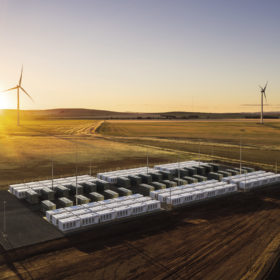
Capturing the full value of energy storage
The International Renewable Energy Agency has devised a valuation framework to lay the foundations for successful storage deployment. As the technology matures and moves toward a projected fall in price, revenue stacking will be crucial to assess viability and properly value its benefits.
UN-backed fund to support solar businesses in Burkina Faso
A fund backed by the United Nations and the government of Luxembourg is helping companies to provide small solar PV systems and innovative cooking stoves in the economically challenged West African nation.
