Japan auctions 197 MW in second PV tender
The Japanese Government has wrapped up its second of three planned solar auctions, with nine companies winning the rights to build a total of 196.96 MW of commercial PV capacity.
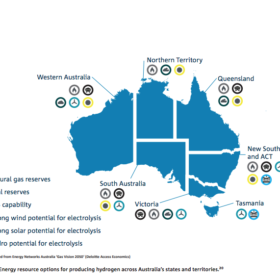
Australia has big hydrogen export opportunity
Low emissions hydrogen offers significant exporting potential for Australia, and could contribute AU$1.7 billion to domestic economy annually, shows a new report released by the Australian Renewable Energy Agency (ARENA). A separate briefing paper released by the Australian government’s Chief Scientist, Dr Alan Finkel, describes hydrogen as Australia’s next multibillion dollar export opportunity.
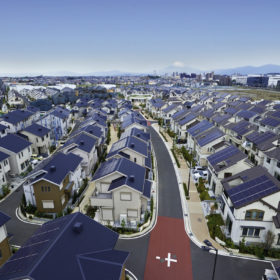
Japan’s PV sector should focus on future energy mix target — report
The Japanese PV industry should respond to the government’s recent decision to leave its 2030 energy mix targets unchanged by pushing for a higher share of solar in the next version of the country’s strategic energy plan, according to a new report.
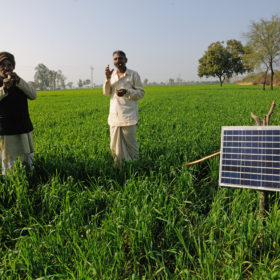
Global off-grid renewable capacity tripled between 2008 and 2017
While Africa has emerged as a dynamic, fast-moving hub, Asia leads in capacity deployment with its total capacity more than tripling to nearly 4.3 GW in 2017 from 1.3 GW in 2008, finds IRENA. Particularly, in India, a strong policy has pushed deployment of off-grid solar for agriculture and public end-uses.
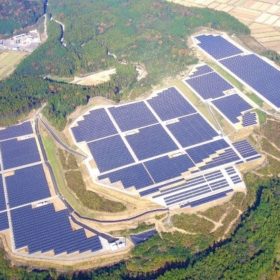
Japanese government must be more unified in pursuit of PV goals — report
The Japanese government is steadily working toward the release of the country’s fifth strategic energy plan, but it needs to work with the private sector more effectively to promote the deployment of solar over the coming decades, according to a new report.
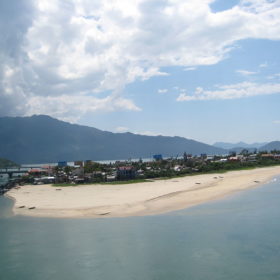
Residential PV demand spikes as Vietnam eyes new installation targets
Residential solar installations have almost trebled in Ho Chi Minh City in the past nine months, in line with the Vietnamese government’s recently announced aim for solar arrays to be installed on 26% of the country’s homes by 2030.
The Weekend Read: Central Asia’s Green Horizons
Despite its huge potential in the region, solar PV has hitherto gained little traction in Central Asia. In Kazakhstan, two utility-scale PV projects have been realized, and a few are in the pipeline for Uzbekistan as it begins to attract international investors. But many challenges on the policy level have yet to be overcome.
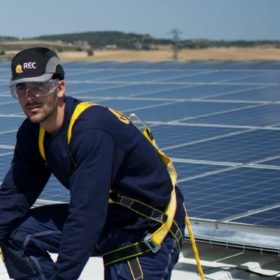
RE employs 10.3 million people, solar PV leads charge with 3.4 million jobs – IRENA
According to figures released by the International Renewable Energy Agency (IRENA), there are more than 10 million people working in the renewable energy industry. In 2017 alone, the sector added more than 500,000 jobs globally, up 5.3 % from 2016, with solar PV the biggest employer.
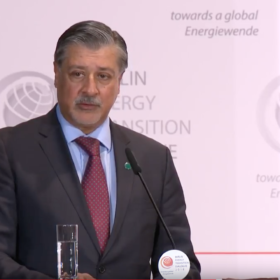
IRENA: Renewables can account for up to two-thirds of total energy use, and 85% of power generation by 2050
In the latest edition of its long-term renewable energy outlook, IRENA calls for at least six-fold deployment of renewables by 2050, compared to the levels set out in current plans. Investment in low-carbon technologies needs to grow by around 30% to US$120 trillion to enable the energy transition and avoid escalating stranded assets, the report finds.
Pakistan should turn to renewables for energy security – IRENA
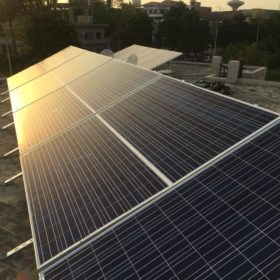
With its growing population and rapidly increasing energy needs, Pakistan’s energy security is undermined by the overriding share of imported fossil fuels in its energy mix. But, by turning to its untapped, tremendous solar, wind and biomass potential, the South Asian country could spur social and economic development, while improving energy access, says IRENA.
