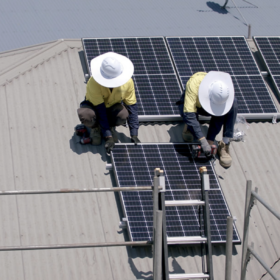
Rooftop solar reshaping Australia’s energy mix
The rise of rooftop solar is rapidly reshaping Australia’s energy landscape with a new report revealing that PV systems mounted atop the nation’s buildings contributed 14.7% of the National Electricity Market’s (NEM) total generation in the first quarter of 2025.

Deakin University launches virtual energy network trial for solar trading
Researchers at Deakin University have launched a first-of-its-kind project exploring how Australian households and small businesses with solar and or battery systems can sell their excess clean energy to others without the technology.

Acen secures approval for 1.2 GW solar-plus-battery project in Australia
Acen Australia’s plan to develop a 600 MW solar farm and 600 MW/1,200 MWh battery energy storage system in Australia has received a major boost, with the New South Wales Independent Planning Commission (IPC) giving its tick of approval.
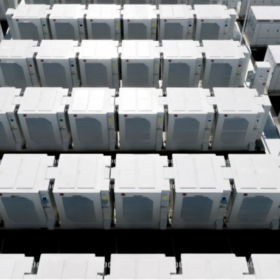
Australian energy storage tender attracts 19 GW of proposals
The Australian federal government’s 32 GW Capacity Investment Scheme (CIS) is already bearing fruit, with a competitive tender seeking 600 MW of energy storage capacity in Victoria and South Australia attracting 19,000 MW of project proposals.
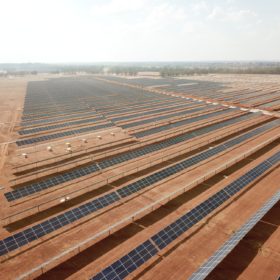
Fotowatio secures financing for 90 MW solar plant in grid-challenged southeastern Australia
Sustainable intentions come together in the signing of a green loan to fund ongoing development of FRV’s Sebastopol Solar Farm, which lender ING says contributes towards its ‘ambition to align our lending portfolio with the Paris Agreement goals.’
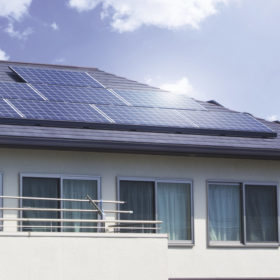
New trial could nix rooftop solar export tribulations in South Australia
As some parts of Australia’s distribution networks threaten to black out under the flow of rooftop solar exports, ARENA announces funding for a trial that will enable flexible exports in line with what the networks can bear. Smart software is the answer.
Grid constraints threaten to curtail more than 1 GW of solar projects in North Queensland
The northern Australian region this week added nine solar plants to the two already threatened – along with a wind farm – with having their output halted under certain conditions.
Australia’s AEMC rejects new rule for calculating transmission losses
The Australian network regulator has ignored pleas from some of the biggest solar and wind project owners in Australia to change the way marginal loss factors (MLFs) are calculated. While it has acknowledged that transmission has failed to keep pace with renewable energy investment, it did not offer any suggestions on what should be done to ameliorate the problem.
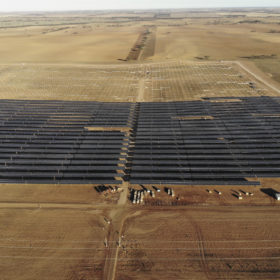
Australian state frees itself from federal shackles to unlock more grid capacity
The government of Victoria has decided to break from national electricity rules and introduce legislation to fast-track priority projects such as grid scale batteries and transmission upgrades, and make room for more large scale solar and wind. The announced reforms have prompted a flurry of reaction.
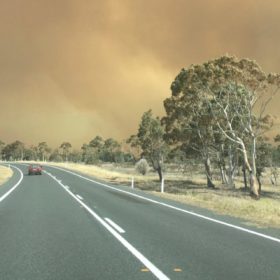
Where there’s smoke… there’s reduced PV output
A minor concern it may be, compared to the tragic loss of life, livelihoods and biodiversity caused by the bushfires still ravaging parts of Australia, but reduced output by PV systems due to smoke haze is an unwelcome bi-product of blazes that have burned at a scale and ferocity never seen before.
