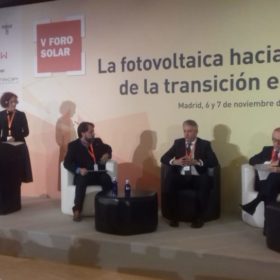
Nothing can stop Spain’s solar train now
At an event held in Madrid this week, the Spanish solar sector made it clear that it is more than ready to achieve the government’s renewable energy targets, which include 50 to 60 GW of new PV capacity by 2030. The sector is experiencing a rebirth.

Ukraine has 121 MW of solar under net metering
Around the half of this capacity was deployed from April to September, according to new official statistics released by the Ukrainian authorities.
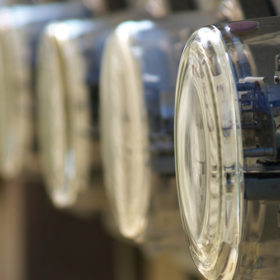
US: Utilities seek greater fees on customers who go solar
The latest report from North Carolina Clean Energy Technology Center finds a surge in proposed fees for distributed generation solar customers, as increasingly complicated structures are proposed to replace net metering.
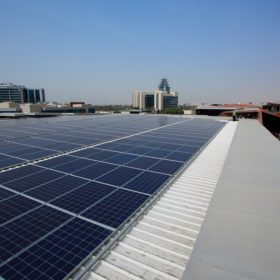
SirajPower develops 50 MW under DEWA’s Shams Dubai initiative
The UAE-based solar company has signed a 15 year lease for a 1.8 MW rooftop project on two warehouses of Apparel Group, a global fashion and lifestyle retail conglomerate.

Beirut Energy Forum: Lebanon’s solar PV takes off
Lebanon’s International Beirut Energy Forum (IBEF) 2018, which took place last week in the country’s capital, saw the announcement of various solar tenders that depict the domestic PV sector’s take off.

Uganda plans for net metering, more off-grid solar
The Ministry of Energy and Mineral Development of the Sub-Saharan country is currently seeking advice for its Decentralized Renewables Development Program, which includes an off-grid master plan for the electrification of islands on Lake Victoria and the creation of a pilot program for solar net metering.

Romania launches rebate scheme to support solar under net metering
The rebate mechanism may cover up to 90% of the costs for buying and installing a rooftop PV system, but grants may not exceed 20,000 RON (around US$4,800). The scheme is intended to support the development of net metered residential solar projects.
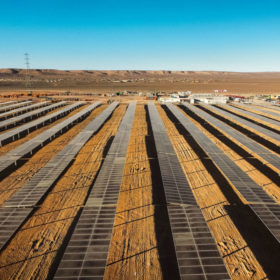
Peru introduces net metering, new DG rules for RE up to 10 MW
The Peruvian Government has submitted to public consultation the draft of Supreme Decree for the regulation of distributed generation (DG), which is the secondary legislation necessary to implement the DG law first promulgated in 2015. Talking to pv magazine, the president of the Society of Peruvian Renewable Energy explains how the new rules will not only introduce a net-billing scheme for installations up to 200 kW, but also a scheme for projects up to 10 MW, which is very similar to the so-called Pequeños Distributed Generation Media (PMGD) program in Chile.
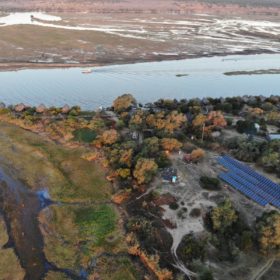
Namibia’s largest PV-plus-storage system installed
German EPC company Cronimet has installed a 150 kW solar array to work alongside a 332 kWh battery storage system at a luxury lodge complex in a remote part of the African nation.

Solar projects under net metering keep growing in Ukraine
Cumulative PV capacity installed under the scheme reached 90 MW at the end of June. Of this capacity, around 27 MW were deployed in the second quarter alone.
