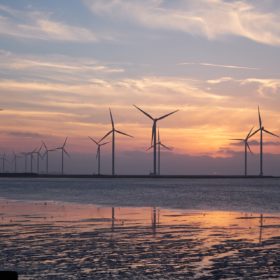
Testing floating PV, storage and hydrogen at Netherlands’ largest off-shore wind complex
Energy companies Shell and Eneco have secured the tender to build the 759 MW wind power plant. The partners will build a pilot solar park, short-term storage capacity and a green hydrogen plant at the facility, to assess their capabilities of balancing intermittent power.

Solar causes highest power peaks under mixed-cloud conditions
Dutch researchers have shown that power peaks caused by solar generation may be stronger under partial cloudiness than clear skies. According to their findings, mixed-cloud conditions can enhance PV power production due to light reflected off clouds, as well as their intermittent shadows on arrays, which reduce module temperatures.
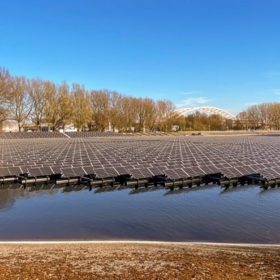
Another floating solar park goes online in the Netherlands
Dutch water supplier Evides Waterbedrijf has commissioned a 1.6 MW floating PV plant at one of its facilities near Rotterdam. It is now considering the construction of more floating solar plants on three other reservoirs, including a 350-hectare water surface.
Dutch grid operators won’t have to compensate for deactivated solar rooftops
Minister of economic affairs and climate change, Eric Wiebes, has written to parliament to confirm grid companies do not have to pay PV system owners when their installations are disconnected from the network due to capacity issues or poor-quality voltage.
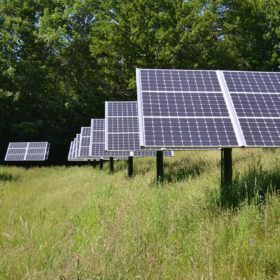
Solar parks may have better biodiversity impact than intensive monoculture farming
A research project in the Netherlands is seeking to assess the impact of large scale PV projects on soil quality and biodiversity. Principal scientist Wim Sinke, of Dutch research center TNO, says well-designed and operated and maintained solar parks could prove to have better outcomes than monoculture farming.

More than 100 GW of solar in the Netherlands? Possible by 2050
Solar capacity is expected to grow to unthinkable levels in the tiny country, according to a new report by Netbeheer Nederland. Under one scenario in which regional governments and companies would take the lead in the energy transition, cumulative solar capacity could reach 125 GW. Under a second scenario, in which growth would be driven by the central government, total PV capacity could hit 106 GW.
Switching from ownership to leasing in times of Covid-19
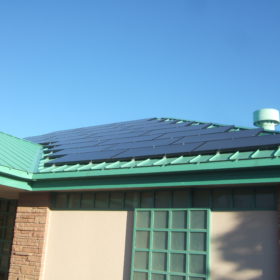
Dutch solar distributor Enie is offering to buy rooftop PV systems from cash-strapped owners who will then receive a monthly leasing fee before regaining ownership of the hardware a decade on. The company will pay around 85% of the initial cost of the arrays but said it will not consider systems with ‘poor’ design or components.

Negative energy price drives loss of Netherlands solar incentives
Negative energy prices for more than six hours mean the Dutch government will pay no renewables incentives under its SDE+ program for March 29. The plunging electricity price was caused by slumping demand for energy as restrictions were put in place to help prevent the spread of Covid-19.
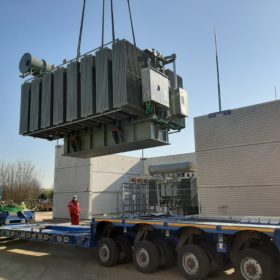
Giant transformers for grid debottlenecking
Dutch power company Liander has installed two large transformers at a distribution station in Ulft, in the province of Gelderland. The devices should provide more room for renewables on the network from next year.
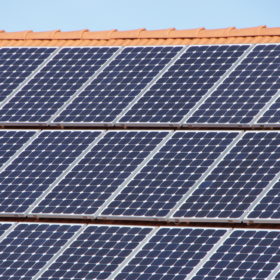
Netherlands to support residential PV through net metering for the entire decade
The Dutch government is planning to reduce tariffs by 9% annually from 2023 to 2030. The plan should still ensure a reasonable payback time for homeowners willing to go solar, according to the authorities.
