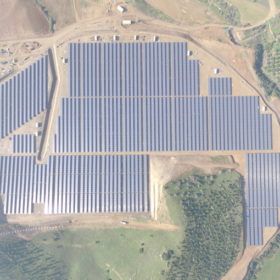
Panasonic completes 11.7 MW HIT module PV plant in Turkey
High-efficiency module manufacturer, Panasonic announced it had completed what it says is the world’s largest project using its HIT solar modules, in Turkey.
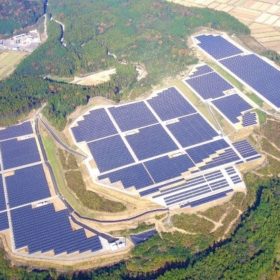
Japan: Large-scale battery, project plans; auction update
Primearth EV Energy (PEVE) announces large-scale lithium-ion battery plans, Germany’s saferay receives financing for a 50 MW PV project, and RTS Corporation provides an update on Japan’s solar auctions.
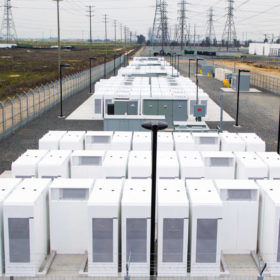
Panasonic mulls further investment in Tesla battery gigafactory as shortages loom
The suggestion of additional investments beyond the $1.6 billion follows reports of battery cell shortages as Tesla’s Model 3 picks up production. It is unknown what impacts this will have on Tesla’s stationary storage business.
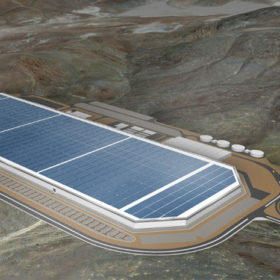
Panasonic to hire 80 workers at Tesla’s US gigafactory
The Tesla/Panasonic gigafactory is taking on more workers, as a sign of health. However many details remain unclear.
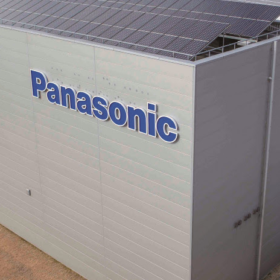
Panasonic, Tesla reveal plan to produce lithium batteries in China
Tesla’s batteries may soon be Made in China. The announcement was made by Panasonic CEO Kazuhiro Tsuga during a conference accompanying the company’s 2018 fiscal-year results.
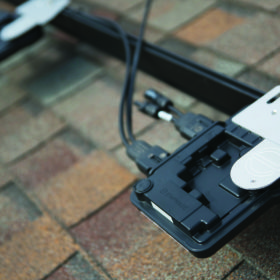
Enphase and Panasonic announce AC module partnership
Company confirms Panasonic’s HIT modules to be fitted with Enphase Energy’s new IQ7X Microinverter as part of the partnership, while Enphase’s new IQ7X microinverter due to be released in May in North America, Enphase confirms.
Panasonic to begin direct sales of solar cells
The Japanese electronics giant announces plans to sell solar cells individually this year, but confirms it is poised to halt module production at its fab in Shiga, Japan, in March.

The weekend read: Taking batteries from lab to market
The conversation around battery cell production may be heated, but it is largely confined to the advanced industrial economies of China, Japan, South Korea and the U.S. Although also a high-tech hub of innovation and manufacturing expertise, Europe has been on the outside looking in for some time. But that could all be about to change as two exciting storage production programs take flight.
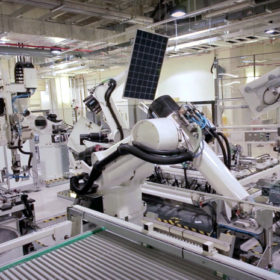
Trump opens the door for specific products, nations to be excluded from tariffs
The U.S. President’s proclamation provides a path for specific products to apply for exemption from tariffs, which had been sought by both SunPower and the government of South Korea. Additionally, imports from a number of developing nations are exempt as long as import levels remain small.

imec, Panasonic develop highly conductive solid nanocomposite electrolyte
The Belgian research institute and the Japanese electronics group say they have developed a solid nanocomposite electrolyte with a lithium ion conductivity several times greater than in its liquid equivalent.
