
Scientists hit 21.6% perovskite cell efficiency using concentrator PV
An international research group achieved the result on a 9 sq mm, triple-cation based, n-i-p structured perovskite cell using low solar concentration levels. Device instability, however, remains a challenge.
Hot news on harvesting electrons in perovskites
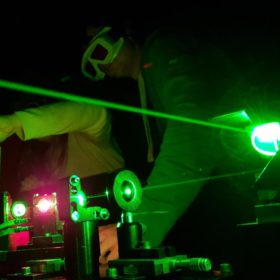
An international research group claims to have developed a new bulk perovskite semiconductor material that can capture the excess energy of hot electrons. The material is said to rapidly absorb as heat energy which would otherwise be wasted. With the harvesting of hot electrons, the maximum theoretical efficiency for hybrid-perovskite solar cells could increase from 33% to 66%.

Swimming electrons in perovskite nanocrystals
Research from Canada has revealed liquid-like lineshape dynamics in cesium-lead iodide perovskite nanocrystals. The findings could be used to produce cheaper and more efficient perovskite cells, researchers claim.
Straining to fix perovskite cells
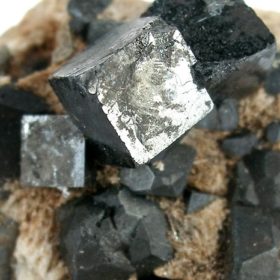
A technique based on optical imaging has been used by an international research team to illuminate strains in lead halide perovskite solar cells without harming them. The scientists claim the approach helped them discover misorientation between microscopic perovskite crystals was the main cause of the strains.

Meyer Burger resists rebel shareholder at EGM
The Swiss solar equipment supplier today fought off an attempt by its largest single shareholder to have a representative appointed to its board and to have its executive pay regime reviewed. Victory in that battle may secure the company some wiggle room, but the war over corporate strategy appears far from over.
Perovskite solar cells need proteins
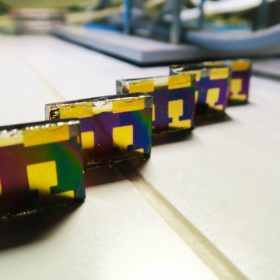
A U.S. research team has used protein bacteriorhodopsin to improve the efficiency of what it called ‘bioperovskite’ solar cells. The scientists used Förster Resonance Energy Transfer to predict the strength of long-range excitonic transport between the perovskite and protein layers.
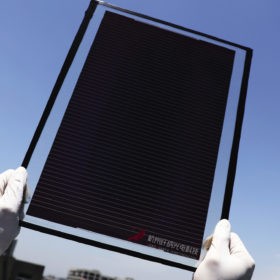
Microquanta achieves 14.24% efficiency with large-area perovskite solar module
The four-year-old Hangzhou-based business says it already has a 20 MW perovskite module pilot line and is working on a mass production facility in the city of Quzhou.
Meyer Burger literally betting the house on HJT cell strategy
The Swiss equipment maker has announced a fresh, CHF18 million order from Oxford PV but the news may have been strategically timed ahead of today’s update that it has completed the sale of its headquarters building.
New configuration gives perovskite cells 18% efficiency
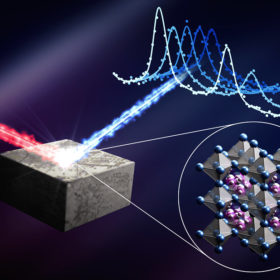
Cesium lead black perovskites could be interesting for solar cell development if their crystals are observed in their less efficient but more stable beta phase. The efficiency shortfall can be solved by healing emerging cracks in the surface of the cell using a choline iodide solution, according to an international team of scientists.

GCL wants a 1 GW perovskite cell production line in place by 2022
With the Chinese manufacturer claiming it has already hit 16% conversion efficiency on a large panel, a recent perovskite conference heard predictions the technology will make up the next generation of PV cells – provided it avoids the pitfalls experienced by thin-film devices.
