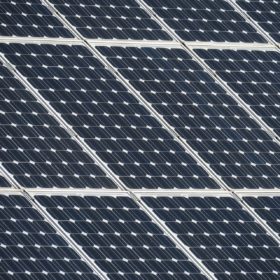
Canadian Solar bags 500 MW panel order from Spain
The modules will be used by U.K. developer Solarcentury for its Cabrera and Talayuela Solar projects in southern Spain.
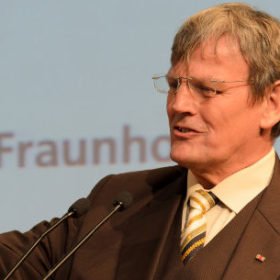
European Solar Manufacturing Council chooses Eicke Weber as chairman
The former director of Fraunhofer ISE will be officially elected at a general assembly planned for September. The ESCM wants a strong Europe to be part of the Fourth Industrial Revolution and also pay attention to sustainability.
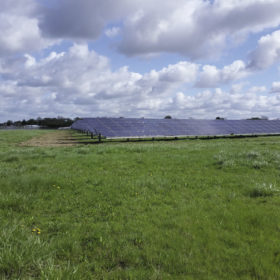
Large scale PV moribund in UK but unsubsidized projects offer hope
The latest government figures show utility scale solar had near-zero growth in 12 months. Although excluded from the Contracts for Difference procurement regime, large scale projects may experience a resurgence thanks to unsubsidized schemes linked to bilateral power supply deals, with the Solar Trade Association predicting 400 MW of such projects may be finalized this year.

Albania to introduce net metering for solar up to 500 kW
The new net metering tariff will be equal to market prices and will go into force as soon as the Albanian government approves it. According to a local interest group led by Albanian company EuroElektra, that could happen within the next two weeks. Overall, the scheme could facilitate the installation of around 200 MW of solar power.
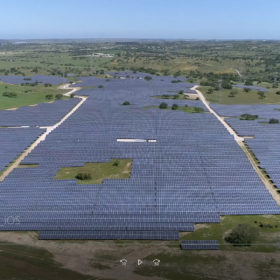
Portugal’s solar tenders draw 300 potential bidders
The Portuguese government plans to allocate over 2 GW of PV capacity through two procurement exercises to be held in June and January. Among the potential bidders — who Portugal’s state secretary for energy, João Galamba, expects to meet soon — there is a range of different Portuguese and foreign players of varying sizes.

First corporate PPA for large-scale PV announced in Poland
The PPA relates to a 5 MW solar project that the renewable energy unit of local utility PGE is developing in south-central Poland. The facility, which is expected to come online in mid-2022, will sell power to two big chemical companies operating in the region.

Lesotho’s solar plans receive support from USTDA
The U.S. Trade and Development Agency (USTDA) has agreed to finance a feasibility study for the country’s first large-scale PV project, which is a 20 MW solar facility that has been under development since 2017, in the tiny African country’s Mafeteng district.
Zhonghuan Semiconductor and GCL-Poly to expand production of mono wafers by 25 GW
The joint venture of the two giant manufacturers will expand its capacity from around 30 GW currently to 55 GW over the next three years. This plan is expected to require an overall investment of $1.34 billion.

Engie signs MoU in Djibouti for 30 MW solar plant
This project is part of the Djiboutian government’s efforts to develop renewable energy in the country, with a target to achieve 100% renewable generation by 2020.

Solar-plus-storage gets its share in Brazil’s auction for non-interconnected state of Roraima
Although only two of the nine projects selected in the auction are for hybrid biomass-solar power plants with some storage, seven will rely on renewable energy sources. The largest selected project, however, is a 123 MW gas power plant in the city of Boa Vista.
