
Storage preferred to net metering in Indonesia as new rules prove ineffective
According to solar body the PPLSA, around 300 PV system owners have already gone off-grid as the tariff granted for surplus power under net metering was not attractive enough. Several barriers are preventing net metering taking hold, including an obligation to either use locally made equipment or pay more to re-certify imported modules and inverters.
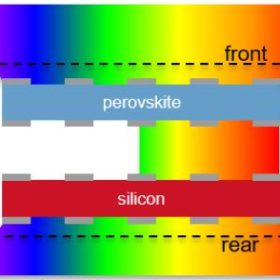
Netherlands’ ECN achieves 30.2% efficiency for bifacial tandem cell based on perovskite
The cell was created by applying a newly developed perovskite cell on top of an industrial bifacial crystalline silicon version. The resulting cell is said to better harvest sunlight, as one unit is optimized for high energy photons and the other absorbs low energy particles.

Colombia awards 1.39 GW of wind and solar in Reliability Charge auction
The capacity comes from two solar parks and five wind power plants awarded firm energy obligations for 2022-2023. The Reliability Charge auctions were created by the Colombian government to ensure power supply during water shortages.
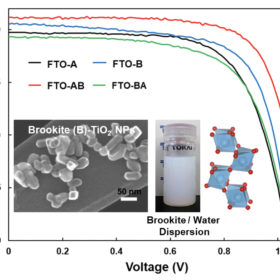
Titanium oxide helps perovskite solar cell reach 16.8% efficiency
A group of Japanese researchers have used anatase and brookite, which are two different variants of titanium dioxide, to improve the efficiency of a perovskite-based solar cell. The use of the two minerals is said to considerably improve the control of the electron transport out of the perovskite layer.

Ukraine reaches 1.33 GW of installed solar power
In 2018, newly deployed PV capacity in the eastern European country totaled 645 MW. Demand is mainly driven by large-scale projects under the FIT scheme, but residential solar under net metering is also providing a significant contribution.
Siemens wants to take over Kaco
After announcing its entry into residential storage a week ago, the Munich-based multinational has now unveiled a plan to acquire inverter manufacturer Kaco. Siemens has not provided details about the value of the transaction.

Germany’s KFW finances 123 MW Chile project selected in 2016 auction
The plant is being built by Spanish developer Solarpack in the Atacama desert. The project was selected in an energy auction held by the Chilean government in 2016. At the time, Solarpack’s bid of $29.1/MWh was a record low for solar.
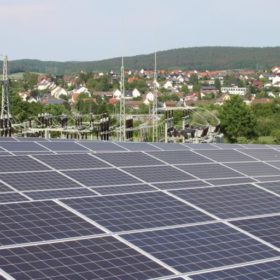
Germany deployed 579 MW of new solar capacity in January
Last month’s jump in new installations was mainly due to the pending FIT cut for installations not larger than 750 kW.

Belgium’s PV capacity tops 4.25 GW
Most of the nation’s solar is in Flanders, which at the end of December had more than 3 GW of grid-connected PV. Wallonia and Brussels account for the remaining 1.1 GW and 83 MW, respectively. Although Belgian solar is still dominated by residential PV, a stronger stimulus for the market may come from the large-scale segment in the years ahead.
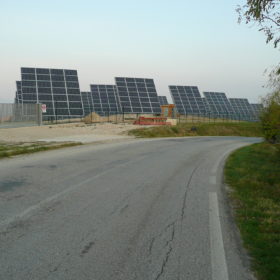
Denmark’s European Energy acquires largest PV project in Italy
The Danish developer has bought the right to build a 123 MW plant in Troia, in the southern Italian region of Apulia. The project was initiated in 2011 and is the largest Italian PV project to have secured all necessary approvals. European Energy plans to start construction this year.
