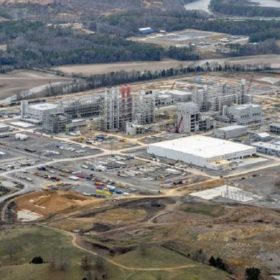
Wacker’s polysilicon business sees profit and turnover fall
The Munich-based chemical company posted an increase in sales but the fall in polysilicon prices last year and the temporary closure of US production after a hydrogen explosion had a significant impact on the results.

Hanwha Q-Cells completes internal going-private reorganization
The South Korean PV manufacturer has finalized its plan to merge with Hanwha Solar. The company will no longer be listed on the Nasdaq stock exchange and will continue as a wholly owned subsidiary of Hanwha Chemicals.
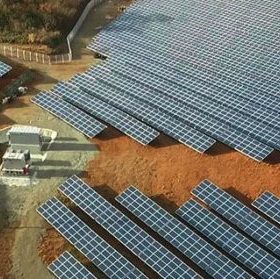
Univergy to install 400 MW of solar in northwestern Spain
The Spanish-Japanese developer wants to build two plants in the municipalities of Grijota and Herrera de Pisuerga, in the province of Palencia.
Renewables, an antidote against volatile electricity prices for the EU
The European Commission says renewables are playing a central role in lowering spot prices and stopping rises in network charges and fees. In the EU energy market, however, coal and gas still dominate, ensuring power prices are unpredictable.
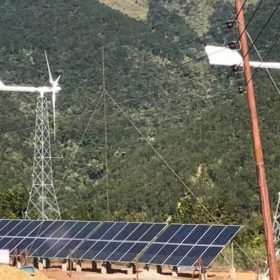
Nepal wants more hybrid wind-solar and needs information on prices
Through three tenders, Nepal’s Alternative Energy Promotion Center is increasing efforts to bring power to rural communities, and to increase the share of renewables in a nation still dominated by hydropower.

Ethiopia launches a tender for 800 MW of solar across four states
The nation’s Ministry of Finance is tendering six large-scale projects in Afar, Somali, Oromia and Tigray. The plants will be developed under a public-private partnership framework and their construction is expected to raise around $795 million.
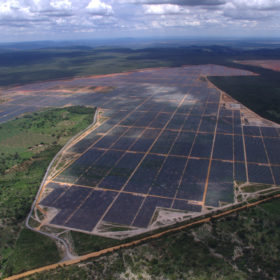
Enel sells Brazilian PV plants totaling 450 MW to China’s CGNEI
Two facilities were sold along with a 90 MW wind power plant generating the vendor around €700 million. Both solar projects were awarded 20-year PPAs in the most successful auction held by the Brazilian government, in August 2015.
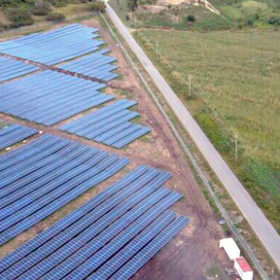
Diverxia secures approval for 240 MW solar park in Colombia
The project, planned for the northern department of Atlántico, will compete in the nation’s renewable energy auction next month.

Argentina: World Bank $250 million guarantee for RenovAr program
The funds will be used by the Argentinian government for solar and other renewable energy projects selected in the third round of the program. The guarantee package was approved by the World Bank in March.
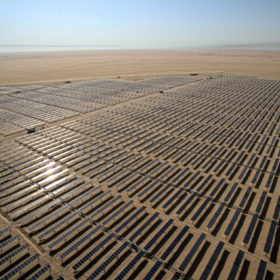
Mexico’s installed PV capacity tops 3 GW
The figure is represented by 39 utility-scale solar plants across 11 states and approximately 85,000 contracts for distributed-generation PV systems.
