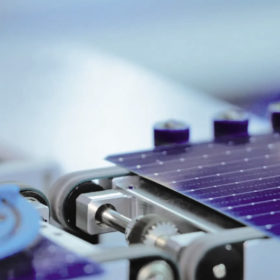
Perovskite-silicon tandem solar cell with TOPCon structure hits 27.6% efficiency
A research group led by Chinese manufacturer JinkoSolar has developed a tandem perovskite-silicon cell with a subcell based on TOPCon tech. The group succeeded in reducing voltage losses in the silicon sub-cell by minimizing the shunting probability during device fabrication.
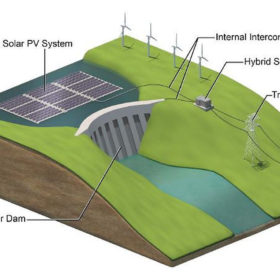
Hybridizing floating solar with hydropower
Scientists from the National Renewable Energy Laboratory (NREL) have said that the combination of floating solar with hydropower could reduce PV curtailment.
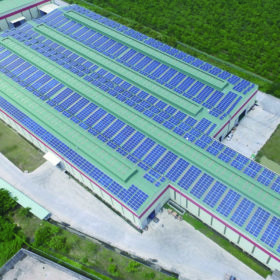
Taiwan maintains FIT rates for rooftop PV
The Taiwanese authorities have decided not to reduce feed-in tariffs for PV, as initially planned, in order to support more solar deployment. The country added around 1.9 GW of new solar capacity last year.
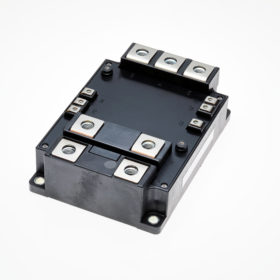
Mitsubishi Electric unveils power-switching transistor for solar
Mitsubishi Electric’s new 2.0kV LV100 semiconductor device is based on its insulated-gate bipolar transistor (IGBT) technology and Relaxed Field of Cathode (RFC) diodes. It is designed for industrial applications that need “middle-ground” power converters between DC1500 V and 3.3 kV.

Storing solar power via borehole thermal energy storage
A Chinese-Finnish research group has proposed the use of seasonal, soil-based thermal energy storage in combination with photovoltaics in residential districts. They have found that the hybrid concept could cover up to 58% of total heating demand.
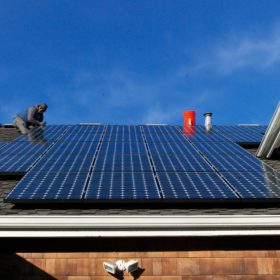
California ruling simplifies grid-connection process for distributed solar, storage
The California Public Utilities Commission has introduced a new rule to streamline the interconnection process for distributed energy resources.
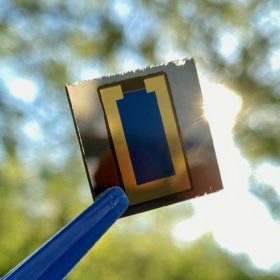
Perovskite-CIS tandem solar cell with 24.9% efficiency
A Dutch-German research team has developed a new PV cell with a certified efficiency of 23.5%, an open-circuit voltage of 1.59 V, a short-circuit current of 19.4 mA cm–2, and a fill factor of 75.5%. It reached maximum efficiency of up to 24.9%, due to the high quality of the subcells.
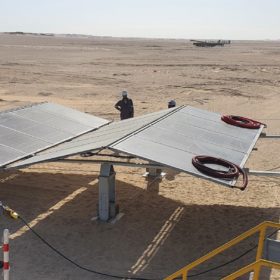
Mobile solar-plus-storage unit for offgrid applications
Enerwhere has designed a solar-plus-storage mobile unit for offgrid locations such as oil and gas fields and construction sites. It can be adapted to different needs and is scalable up to megawatt-scale projects.
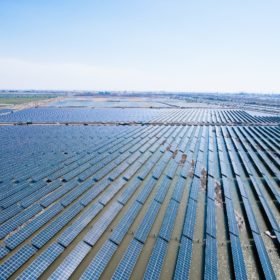
Chinese fishery hosts 70 MW solar plant with high-power modules
Concord New Energy has connected a new 70 MW solar plant to the grid in China. The project, which is situated on a pond, also supports fish and shrimp aquaculture. Trina Solar supplied 670 W solar panels for the installation.
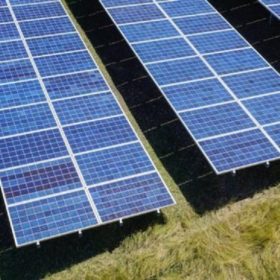
India’s first fractionally owned, ground-mount solar plant
A 5 MW open-access solar project in the Indian state of Karnataka has become the nation’s first fractionally owned, ground-mount PV plant. Bengaluru-based Pyse is financing the $3.3 million project through its investment platform.
