Chinese PV Industry Brief: Huawei launches new unit for renewables and electric vehicles
The technology company and inverter maker has created a new unit to operate in the renewables and e-mobility sectors. Elsewhere, China’s largest e-commerce company, JD.Com, has signed an agreement with the world’s biggest wind company, GoldWind, to establish a renewables joint venture.
Chinese PV Industry Brief: Another massive polysilicon order, Tongwei starts operations at 30 GW cell factory
GCL-Poly will provide JA Solar with 148,000 metric tons of polysilicon over the next five years. Tongwei produced its first 210mm PERC cell at its Jintang factory.
Chinese PV Industry Brief: Polysilicon and wafer prices keep increasing
Longi has raised its wafer prices for June and the China Nonferrous Metals Association has reported this week that polysilicon reached a price of RMB200-210 per kg, and that the highest price exceeded RMB230 per kg.
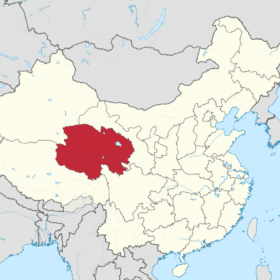
Chinese PV Industry Brief: Earthquake disrupts wafer production in Yunnan and Qinghai
Solar manufacturers Longi and Zhonghuan Semiconductor have reported output at their factories in the two provinces has been reduced by earthquakes that happened on Friday night and before dawn on Saturday. Elsewhere, module maker Jolywood has announced the signing of an agreement with the city government of Taiyuan, in Shanxi province, to build a TOPCon solar cell fab with a 16 GW production capacity.

GCL shareholders to vote on further 670 MW of project sales
Shareholders will vote on whether to approve the sale of ten solar farms to generate $320 million towards paying down its heavy debt pile.
Global solar supply chain under scrutiny
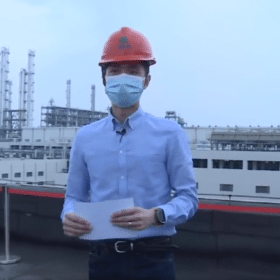
The discussion about the extent to which forced labor exists in the solar value chain continues. A video, a university report, a ministerial response and a parliamentary machinations formed notable developments of the debate last week.

GCL reveals it lost 865 million shares in New Energy business over loan disagreement
The Chinese polysilicon manufacturer said it only discovered this month that the stock in its solar project division – which it had pledged to secure a $60 million loan which GCL says was never delivered – had been claimed by the lender a year ago, on the grounds the finance agreement had been breached.
Chinese PV Industry Brief: New budget for residential PV, financials for Daqo, Canadian Solar
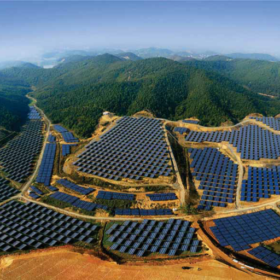
China’s National Energy Administration (NEA) has allocated some $77 million for residential PV incentives. This should be enough to deploy another 1 GW of rooftop PV.
Price trends amid polysilicon shortage
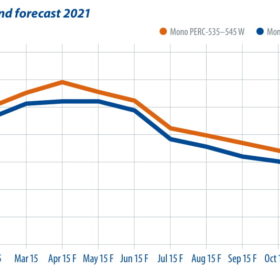
Recent financial statements from the big module manufacturers indicate that higher prices for polysilicon and PV glass since the third quarter of 2020 have dealt a severe blow to profits in the module business. Module manufacturers have gradually scaled down capacity utilization since the Lunar New Year, as demand has been weaker than expected, given the absence of China’s usual June 30 installation rush, as in past years. In April, Tier-1 module makers further cut utilization rates to 55-70%. PV InfoLink’s Corrine Lin examines the price trends that are developing in 2021.

GCL auditor resigns over silicon project pre-payment probe
Deloitte has walked away from the polysilicon manufacturer, despite the latter having followed the accountant’s recommendation to appoint a third party to investigate why a near-$80 million payment was made in September 2019. Apparently the parties could not agree the detail of the investigation to be carried out.
