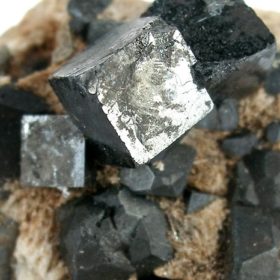
Bifacial perovskite solar cells may become more eco friendly than crystalline ones
A US study has suggested the raised energy yield of bifacial perovskite devices effectively means they could have a lower environmental impact than conventional crystalline cells. The researchers considered single-junction cells with high and low bandgaps and similar, multi-junction devices with two and four-terminal structures.
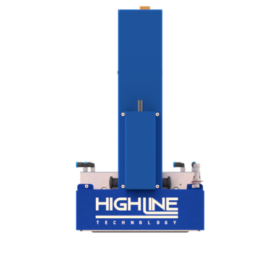
Fraunhofer ISE solar cell manufacturing spin-off could reduce silver content
Highline Technology GmbH has a production process in which metal contacts are applied without touching the front of solar cells, reportedly saving resources and raising efficiency.
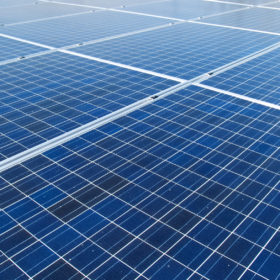
New method to measure cell voltages in operational PV modules
Scientists in Japan have proposed a new model to estimate cell voltages in solar modules by irradiating the cells with a weak modulated laser light. The method could be used to detect hot spots and other panel-degradation issues, such as potential induced degradation (PID) peeling, cracking, and poor contacts.
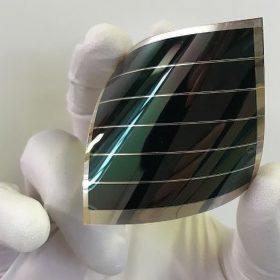
An organic solar cell with 25% efficiency
The ‘best conversion performance in the world in a dark room’ is how the developers of a new organic PV device have described it. Such cells could be used as a wireless source of energy for internet of things applications or in gadgets such as temperature-humidity and motion sensors.

New layer raises efficiency of heterojunction solar cells
A Dutch research team has used highly transparent, hydrogenated nanocrystalline silicon oxide layers to improve the optoelectrical performance of contact stacks in a silicon heterojunction device. The material is said to offer superior electrical as well as favorable optical properties.
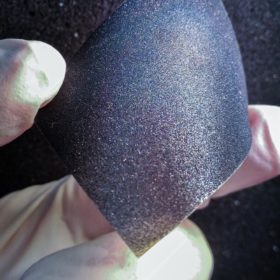
New kesterite solar cell with 8.7% efficiency
Estonian researchers have developed a new monograin powder technology made of microcrystals, which can form parallel connected miniature solar cells in a large module. By replacing copper with silver in the absorber material, the researchers were able to increase the efficiency of the cells by more than 2%.
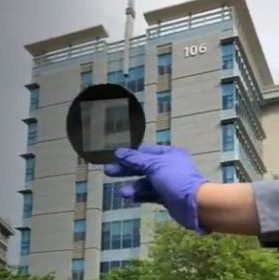
New transparent solar cell for window applications
South Korean scientists have transformed an opaque crystalline silicon solar cell into a transparent one by punching holes into it measuring around 100 μm in diameter. A neutral-colored, transparent c-Si substrate was used to develop the new cell, which is said to have an efficiency of up to 12.2%.

Analysts expect stable prices along the PV value chain
Energy trend and PV Info Link assume little movement in prices for silicon, wafers, solar cells and modules in the coming weeks. The capacity adjustments of solar manufacturers, however, are set to continue.

India’s Supreme Court allows imposition of 25% duty on solar imports – reports
In a significant move, which will greatly impact India’s solar industry, the country’s Supreme Court has reportedly given the go-ahead for the government to impose 25% safeguard duties on imports of PV cells and modules. The levy will be effective July 30, 2018.
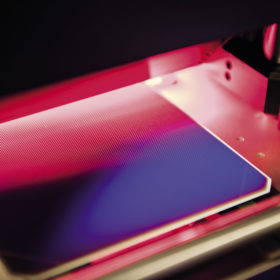
The weekend read: Cells of the future
For solar to survive in a world without feed-in tariffs, further innovation focused on cost reduction is necessary. In this white paper, scientists from Swiss equipment supplier Meyer Burger argue that high efficiency cell concepts, and in particular heterojunction, will be among the best technologies solar can bet on to achieve this.
