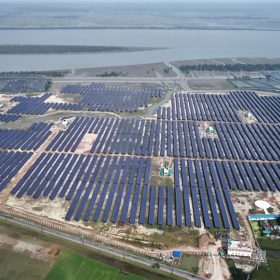
Bangladesh approves 1.5 GW of solar
Bangladesh has approved more than 1.5 GW of solar projects over the past seven months, with recent developments including tariffs for 200 MW in November and 310 MW in October.

Planet One Group secures $52 million financing for 50 MW solar farm in Sierra Leone
A consortium of financial institutions last week announced they co-invested $52 million to help finance the development of a 50 MW greenfield project in Sierra Leone titled Planet Solar spearheaded by Frontier Energy and Planet One Group.
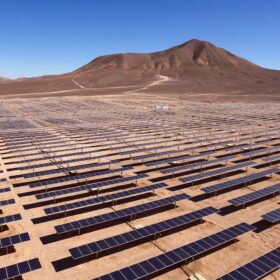
Solar LCOE now 29% lower than any fossil fuel option, says EY
A report from Ernst & Young (EY) shows that despite inflationary pressures, solar remains the cheapest source of new-build electricity. The global weighted average levelized cost of electricity (LCOE) for PV is now 29% lower than the cheapest fossil fuel alternative.
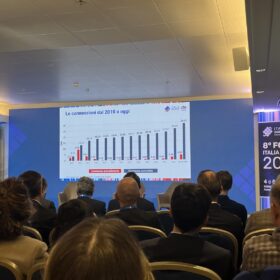
Key takeaways from Italia Solare Forum
The Italia Solare Forum this week in Rome highlighted the renewed importance of the large-scale solar segment in Italy and underscored the huge potential of energy communities, given the EU’s recent approval of a dedicated incentive scheme.
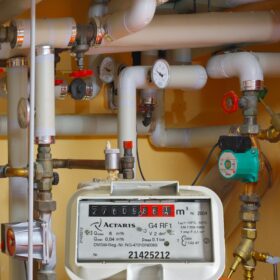
EU likely to phase out fossil fuel-powered boilers by 2040
The European Parliament and European Council yesterday provisionally agreed to phase out fossil-fuel boilers in the next two decades, among a raft of other infrastructure recommendations aiming to boost infrastructure energy efficiency. Europe’s peak body for heat pumps, the European Heat Pump Association (EHPA), welcomes the news.

US solar industry back on roller coaster through 2026
The Solar Energy Industries Association (SEIA) and Wood Mackenzie predict that 33 GW of solar will likely be added in the United States in 2023. Despite economic challenges in the near future, solar is expected to be the largest source of generating capacity by 2050.
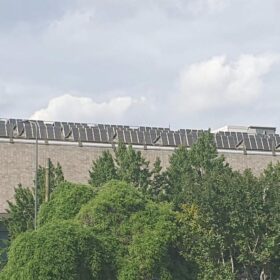
Exploring the depths of Italy’s oldest BIPV project
Scientists have assessed the performance of Italy’s first publicly funded BIPV project, which was installed in 2001. Their analysis shows that only one of the 10%-efficient panels in the 11 kW array experienced a severe fault that caused the complete loss of functionality.
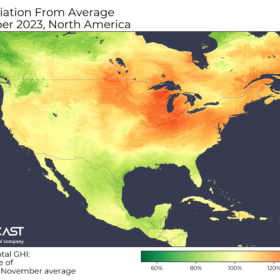
November high pressure delivers high irradiance in the Northeast U.S., cloud in the Gulf
In a new weekly update for pv magazine, Solcast, a DNV company, reports that North America in November experienced a divide in irradiance patterns across the continent.

MIT researchers plan to use acenes to make singlet fission solar cells
Acenes are benzene molecules with unique optoelectronic properties. Singlet fission solar cells can produce two electrons from one photon, making the cell more efficient.

Australian town to host 200 MW/1,600 MWh compressed air storage facility
Canada’s Hydrostor has struck a deal to provide backup power to a remote town in the Australian state of New South Wales by using a compressed air energy storage plant that will be built in an underground cavern at one of the region’s closed mines.
