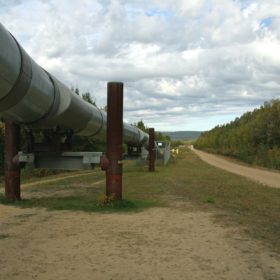
Hydrogen economy needs public policies
According to the 2020 Global Gas Report by Snam, the International Gas Union and BloombergNEF, public policies are required to support clean hydrogen reach industrial clusters and to facilitate large-scale use. The authors of the report acknowledged the advantages of using wind and solar to directly power electrolysis, but they do not discard the possibility of using gas power with carbon capture storage. The experts of the three parties also identified barriers to remove for future development.
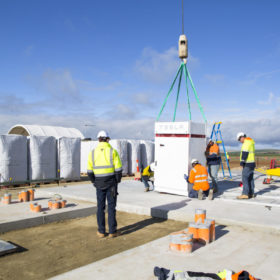
Neoen completes expansion of Tesla Big Battery in Australia
Neoen has successfully expanded the Hornsdale Power Reserve, otherwise known as the Tesla Big Battery, in Australia. If testing goes well, Hornsdale could start to function with an expanded remit of synthetic inertia services, which could have a big impact on regulatory changes.

Analysis: Initial results of Portugal’s solar+storage auction
Portugal’s recent PV auction marks a new era of battery storage for the country, says UK consultancy Everoze. It notes that the auction was so competitive that the winners had to cut their expected remuneration in the solar+storage category to negative values. It claims that the real winner is the government, as it is maximizing the value of scarce grid capacity, and argues that the auction could become a benchmark for nations with limited grid space.

Renewables-powered 25 MW electrolyser at Dutch port
The large-scale green hydrogen facility is being developed by Dutch energy company VoltH2 at the North Sea Port. The project is planned to be expanded to 100 MW.

EBRD may finance ACWA’s 200 MW solar plant in Egypt with $54 million loan
The $155,4 million project was secured by the Saudi energy giant through a tender held in 2019. The facility will sell power at a price of $0.02752/kWh.
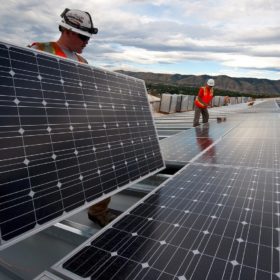
Repositioning Australian rooftop PV
A University of South Australia study has shown that solar owners selling electricity to the grid should position their panels to minimize the discrepancy between peak use and peak production.
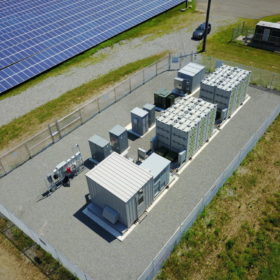
Eos announces 1.5 GWh of zinc battery storage in Texas, California
The summer of battery storage rolls on, with developers of zinc hybrid cathode technology announcing big news.

Germany to tender 18.8 GW of PV by 2028
The German government is planning to tender 5.3 GW in the rooftop segment and 13.5 GW for large-scale PV projects.

Niger holds firm on plan to build solar park at diesel-fueled thermal plant
The solar plant is expected to have a capacity of up to 60 MW and will be located at the 100 MW Gorou Banda thermal power station commissioned in 2017.

Computational method shows Italy may install 144.5 GW of PV by 2050
According to a new study, PV may reach an installed power of 144.5 GW in Italy by the end of the first half of the century, followed by onshore and offshore wind with 59.6 GW and 17.6 GW, respectively. The research is based on a new computational model that identifies the best spatial distribution of renewable energy sources in an individual country or electricity system while avoiding problematic concentrations of technologies
