
Interview: Sonnen MD, Schröder resigns, announces start-up
During the past three years, Philipp Schröder has built up and consolitaded the Sonnen brand. Now the self-proclaimed “Sonnen Warrior” is going his own way, although he will remain an advisor to the German storage provider. Managing Director, Christoph Ostermann regrets the departure, but emphasizes that with the strong management team that has been established, he will continue to promote the company’s growth.
Italy to hold first 500 MW wind-solar auction in January
The new Italian government has maintained, almost unchanged, the provisions for the creation of an auction scheme for solar, wind and other renewables designed by the previous government. It has, however, postponed the first auction for large-scale projects from November to January. Furthermore, it has introduced new rules to enable the replacement of asbestos covers with rooftop PV systems through an ad-hoc FIT scheme.
Tanzania to host two MW-sized solar mini-grids
Tanzania-based mini-grid operator, Jumeme is tendering two 1 MW projects in the Rukwa and Katawi regions. The projects are being developed in the frame of the Micro Power Economy, Tanzania Roll out program, which is financially backed by the Africa Enterprise Challenge Fund (AECF).
Argentina to launch 400 MW mini RE auction next month
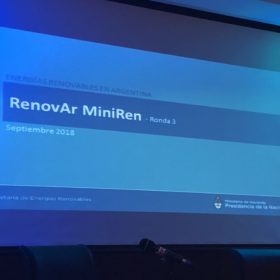
The mini-tender will be held under the RenovAr program for large-scale renewables, but will be limited to projects not exceeding 10 MW in size. The quota for solar and wind will be around 350 MW. Auctions for projects larger than 10 MW were suspended by the Argentinean government in early August.
Interview: Solar is paving its own road in Brazil, regardless of politics and economy
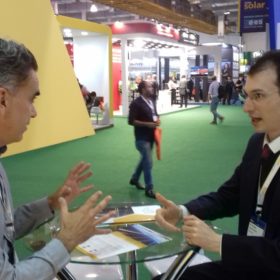
In an interview with pv magazine at this year’s Intersolar SA in Sao Paulo, Rodrigo Sauaia, president of Brazilian solar association, ABSSOLAR discussed the current issues and opportunities in Brazil’s PV market. The association is calling on the Brazilian Government to contract up to 2 GW of solar power in future auctions, and to maintain current rules for DG. The private PPA segment, meanwhile, which only a year ago appeared unviable, has begun to show positive results. All in all, solar in Brazil is growing, despite the hurdles created by a difficult political and economical environment.

The Philippines needs a cost-effective net metering policy – report
Under the current scheme, rooftop PV remains far below its huge potential in the country. Regulatory, administrative and financial hurdles are preventing more electricity consumers from installing rooftop arrays, as well as the resistance of local utilities.
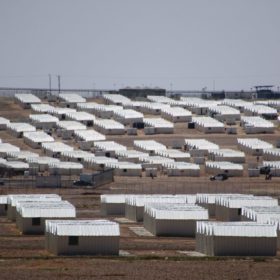
Jordan’s Azraq refugee camp to get another 5 MW PV plant
Through a new tender the Jordanian government is seeking bids for the construction of a second solar facility at the Azraq camp. The project will be financed with European Union funds.
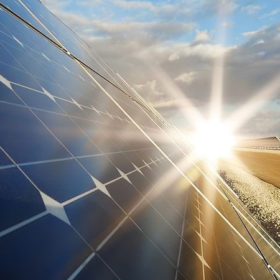
PV steps in to cover coal and nuclear power shortfalls
The sunny, dry summer has seen solar break several records and PV kept the lights on when a lack of coolant – caused by rising river water temperatures – led to the temporary shuttering of conventional power plants in France and Germany.

If you want peace, prepare for solar
Solar has the potential to foster peace and aid conflict resolution by being deployed in several of the world’s crisis areas. Electricity is one of the highest costs for humanitarian missions in fragile regions, such as South Sudan, the Congo, Somalia, Myanmar and Yemen, among others. In an interview with pv magazine, the CEO and founder of Energy Peace Partners describes how solar installed in camps and protected areas, could improve the outcomes of such missions.
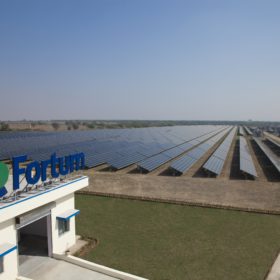
Only three bids for Montenegro 200 MW solar tender
The interested developers are a consortium formed by Fortum and local utility EPCG; Malta-based IREDL; and a domestic group named Montesolar.
