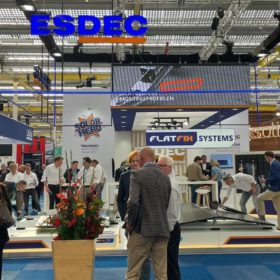
Solar Solutions marks return of PV trade shows to Europe
The Dutch event has attracted bumper crowds this week as the Dutch solar PV market continues to defy skeptics with its tremendous growth.

Massive solar project under development in Finland
The solar park will occupy 500ha of abandoned peatland in southern Finland. The project’s levelized cost of energy is estimated at less than €0.04/kWh.

How much glass is needed for terawatt-scale PV?
German scientists have assessed demand for resources such as glass and silver until 2100 and have found that current tech learning rates could be sufficient to avoid supply concerns.
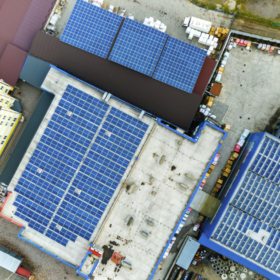
Panama could install 1.7 GW of distributed-gen PV by 2030
The government of Panama has outlined a new strategy for distributed-generation PV. The Central American country currently has an installed distributed-generation solar capacity of 46.63 MW.
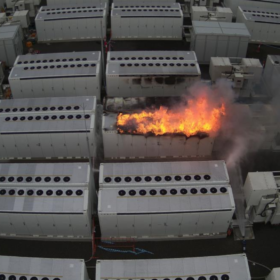
Australia’s biggest battery cleared for testing following fire
Energization testing is set to resume this week for Neoen’s 300 MW/450 MWh Victorian Big Battery, following a fire that caught global attention and destroyed two of its Megapacks on July 30.
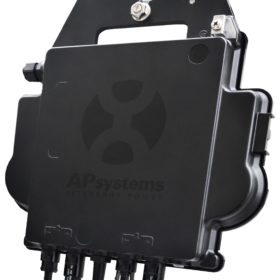
APsystems reveals dual microinverter
The 97%-efficient microinverter has a power output of up to 960 VA and APsystems claims it is the most powerful dual microinverter in the world.
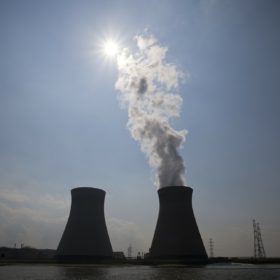
Renewables vs. Nuclear: 256-0
The latest World Nuclear Industry Status Report shows that the world’s operational nuclear capacity grew by just 400 MW in 2020, with generation falling by 4%. By contrast, renewables grew by 256 GW and clean energy production rose by 13%. “Nuclear power is irrelevant in today’s electricity capacity market,” the report’s main author, Mycle Schneider, told pv magazine.
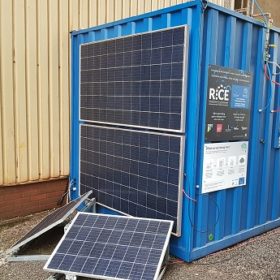
The Hydrogen Stream: Mongolia’s potential for producing green hydrogen at $3.30/kg
A German research group has identified Mongolia’s South Gobi region as an ideal location for the production of cost-competitive green hydrogen. Elsewhere, the U.K. is seeing more on and offshore-powered renewable hydrogen projects.

Italy allocates 297.6 MW of PV in sixth renewables auction
The lowest bid came in at €0.0618/kWh and was offered for a 23 MW wind farm. The lowest bid for PV technology was €0.0685/kWh. All bids were slightly below the ceiling price of €0.07/kWh.
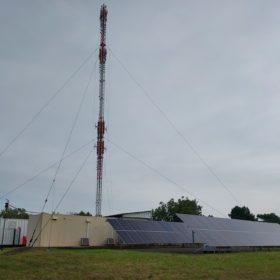
Solar-plus-hydrogen for air traffic control
A 19.8 kW PV system is powering a telecommunications antenna at a French air control center. When it produces more energy than needed, the surplus is used to produce hydrogen which is then utilized to produce new electricity via a fuel cell system and provide power to the antenna during a period of up to five days. For short-term storage, lithium-ion batteries are used.
