First attempt to build UV-stable perovskite solar cells that harvest energy from ‘black lights’
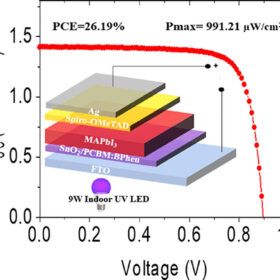
A UK research group has fabricated perovskite solar cells that can harvest energy from near-ultraviolet (UV-A) indoor LED lights. The devices achieved an efficiency of 26.19%, an open-circuit voltage of 0.90V, a short-circuit current of 1.42 mA/cm2, and a fill factor of 77.56%, resulting in a maximum power output of 991.21 μW/cm2.
Toyota uses Kaneka’s 26.63%-efficient solar cells for electric vehicle
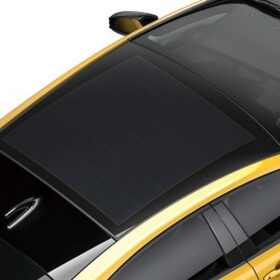
Kaneka said the cells will be utilized in the roof glass of Toyota’s Prius PHEV electric car. It plans to begin full-scale delivery of in-vehicle PV products this year.
All photovoltaic-thermal system designs at a glance
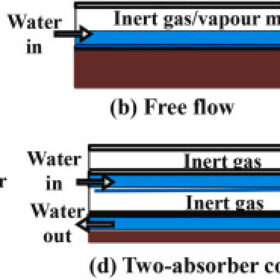
An international research team has presented all possible system designs and applications for photovoltaic-thermal (PVT) technology. Their review includes conventional PV-T collectors, air-based systems, liquid-based installations, water-based collectors, refrigerant-based systems, heat-pipe-based technologies, dual air-water systems, building-integrated PVT arrays, and concentrated PVT collectors.
Perovskite solar cell achieves 24.3% efficiency, high stability via binary mixed hole transport layer
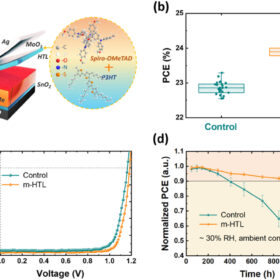
Researchers in China have built a hole transport layer with a mixed binary configuration integrating the polymer Regioregular poly(3-hexylthiophene) (P3HT) and Spiro-OMeTAD. They used it to build a perovskite solar cell that was able to retain 90% of its initial efficiency after 1,200 hours of storage in dark ambient environment.
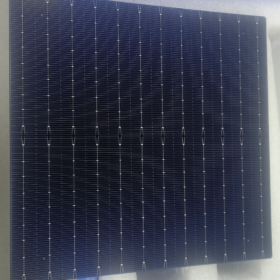
Solar testing group warns of degradation risk for TOPCon
The Renewable Energy Test Center (RETC) raised the issue of ultraviolet-induced degradation of the trending technology in its PV Module Index 2022.

Big PV plants may have positive climate impact in deserts, say researchers
Chinese researchers have discovered that solar plants might reduce evaporation and wind speeds in the Gobi Desert, while also increasing soil relative humidity, according to a series of simulations with different emission scenarios.
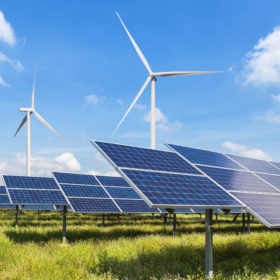
Potential locations for solar, wind hybrid projects in India
Indian scientists have created a hybrid power exploitability index to identify optimal locations for constructing new solar and wind hybrid power plants. They have evaluated retrofitting existing standalone plants and have discovered that all but one of the eight plants could be hybridized, with up to a 400% annual increase in power output.
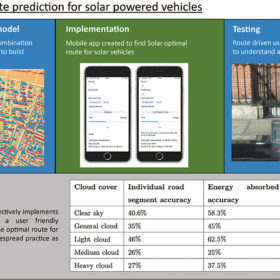
Mobile application to predict optimal energy efficient route for solar vehicles
Irish researchers have created a mobile app that calculates the best route for solar-powered vehicles based on user preferences for time and energy efficiency. The app’s experiment predicted the most energy-absorbing route with 51.65% accuracy and chose the most energy-consuming route with 86.65% accuracy.
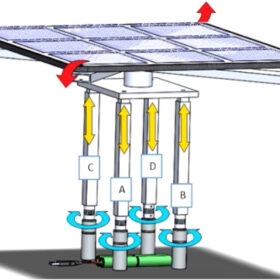
Low-cost, portable sun-tracker for offgrid solar
Mauritian researchers have developed a solar tracker prototype that increases current by around 37%. The device uses a simplified and mechanical tracking system.
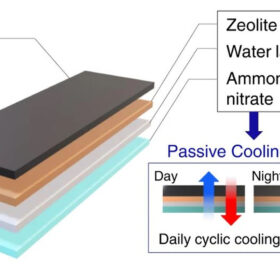
Passive solar module cooling tech based on water sorption
South Korean scientists have developed a WD-ER cooling system that can lower the operating temperature of a PV panel by up to 14.9 C, with an average heat transfer coefficient of 64.1 W/m2.
