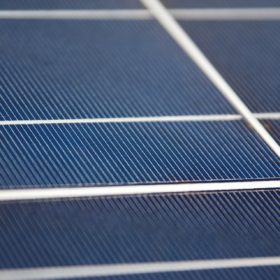
The ‘butterfly effect’ of Chinese PV listings
A recent study shows that PV costs have declined faster than any other energy technology over the past two decades. The researcher behind the study said this would not have been possible without the “butterfly effect,” which is based on the idea that a small change in one part of a complex system can have a large impact elsewhere. The researcher also attributed the the rapidly declining cost of PV to Chinese manufacturing and strong US investor support.

New methodology for assessing value of PV in uncertain markets
A new process is described as a tool to assess the value of deferring, relocating or abandoning PV projects under development in uncertain market conditions. Researchers say the model may help investors reconsider projects which could be prematurely rejected based on traditional analytical approaches.
Peering into a 55% solar future for the US
National Renewable Energy Lab researchers conducted hourly modelling based on a future energy mix containing 55% solar power and found spring days of free electricity among the results, emphasizing the critical role energy storage will play.

Scientists hit 21.6% perovskite cell efficiency using concentrator PV
An international research group achieved the result on a 9 sq mm, triple-cation based, n-i-p structured perovskite cell using low solar concentration levels. Device instability, however, remains a challenge.

Solar and wind offer safest route to decarbonized electricity mix
The mature renewable energies are the most efficient power resources to slow down global warming and reduce human health impacts, according to a new study published in Nature Communications. The authors claim renewable energy generation capacity is also the best way to reduce land use, toxicity and drinking water depletion.

Fossil fuel dependence and poor governance? Fasten your seatbelts
A study of the after-effects of the energy transition has assessed 156 nations and ranked a surprising winner. Here, energy expert Indra Overland discusses the findings of the GeGaLo Index as part of our interview examining renewables and geopolitics.
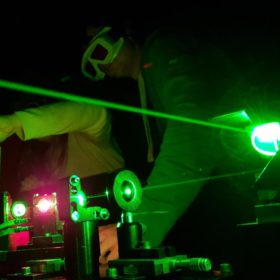
Hot news on harvesting electrons in perovskites
An international research group claims to have developed a new bulk perovskite semiconductor material that can capture the excess energy of hot electrons. The material is said to rapidly absorb as heat energy which would otherwise be wasted. With the harvesting of hot electrons, the maximum theoretical efficiency for hybrid-perovskite solar cells could increase from 33% to 66%.
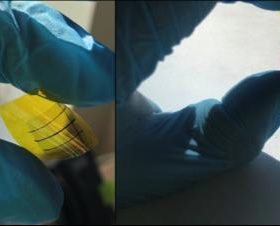
International research group claims 8.8% efficiency for amorphous solar cell
The new cell is based on a p-type transparent conductor made of carbon nanotube fibers. The device is said to offer 16% more efficiency than rival amorphous cells.
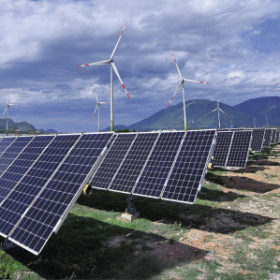
A new converter topology for hybrid wind-solar
A researcher has proposed a new approach to apply maximum power point tracking techniques to optimize electricity production in wind-solar power projects. The permanent magnetic synchronous generator hybrid model used in the study is based on a multi-input rectifier stage which is said to be able to eradicate current harmonics and eliminate the need for extra input filters.
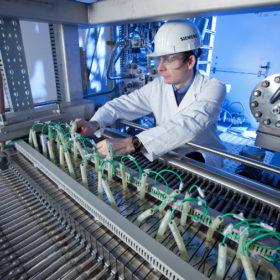
Green hydrogen to reach cost parity by 2030
Recent analysis from Wood Mackenzie predicts green hydrogen, produced primarily by solar electrolysis, will reach cost parity in Australia, Germany and Japan by 2030.
