
Quantum dot hybrid HTJ cell with 12.82% efficiency
South Korean researchers have developed a hybrid tandem solar cell based on quantum dots and organic bulk heterojunction (BHJ) photoactive materials. They claim that the cell could reach an efficiency rate of around 15% if they continue to reduce energy losses in the quantum dot cell and enhance near-infrared absorption.
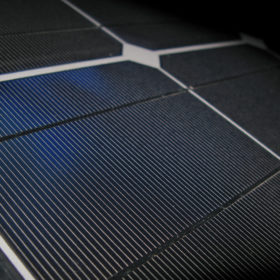
Integrating stress and temperature sensors in crystalline silicon cells
Fraunhofer ISE researchers have integrated stress and temperature sensors within a PV module. They claim that the devices cover a very minimal part of the cells, and that their interaction with the module and the cell itself is quite limited. The sensors can be manufactured as part of a regular cell manufacturing process.
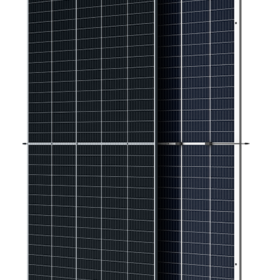
Trina unveils two 500 W bifacial solar modules
The Duomax V and Tallmax V panels are equipped with glass-glass and glass-backsheet frames, respectively. Both offer a reported 21% efficiency and orders will be taken from the second quarter on. Trina plans to have a combined 5 GW of annual production capacity for the products this year.
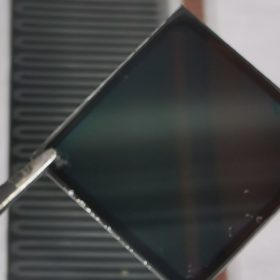
International consortium claims 25% efficiency for perovskite CIGS solar cell
Researchers led by Belgian institute imec claim to have achieved the result with a 1cm² perovskite tandem solar cell. The result tops the 24.6% efficiency the consortium announced in September 2018. The cell’s developers are now aiming for 30%.
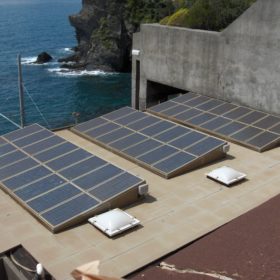
Why go solar? We can think of at least 333 reasons
Australian researchers have compiled data from 173 studies which examined homeowner behavior when buying rooftop PV and identified 333 predictors related to the attitude, knowledge, tendency, awareness, willingness and intent of householders.
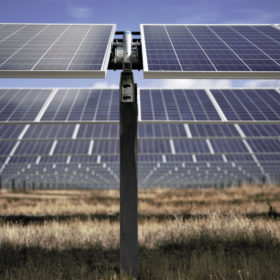
Wireless sensing for remote operation of off-grid tracker solar
Researchers in Thailand are proposing a wireless monitoring solution for PV in remote locations. The system, based on global standard ZigBee 2.4 GHz wireless technology, can read data and tilt solar panels in auto and manual modes.
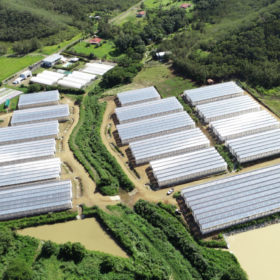
Agrivoltaics in New Caledonia
The 16-greenhouse Focola project has been developed by French renewables developer Akuo and local utility company Enercal Energies Nouvelles on the Pacific Ocean territory.
Self-healing polymeric coating for organic PV
A new polymer developed by Indian researchers can mend its own cracks when exposed to ultraviolet light. The unique ability makes it an ideal candidate as a smart coating for photovoltaic solar devices to prevent damages and increase performances.

Recycling lead-acid batteries for perovskite solar cell manufacturing
Researchers from China are proposing to use spent battery lead for creating a perovskite that can be used in the production of solar cells that are based on this promising material. The proposed one-step process, which was tested in the production of a 17.38% efficient perovskite heterojunction cell, is said to be cheaper and less energy-intensive than other recycling processes for waste lead from lead-acid batteries.
How do solar cells work underwater?
Although cells lose much of their power yield when submerged, they may not be useless. Researchers in India say submerged cells could be used in monitoring sensors and for other commercial and defense applications. An amorphous silicon cell from Panasonic was tested in their study.
