
Financing key to scaling up SME rooftop solar in India — Deloitte
India’s Micro, Small and Medium Enterprises (MSME) sector is expected to make a significant contribution to the country’s rooftop PV target of 40 GW by 2022. However, a range of issues — including low public awareness, the scarcity of low-cost financing and the need for rooftop aggregation models — must be addressed before rooftop solar can be aggressively scaled up, according to a new report from Deloitte and the Climate Investment Funds (CIF).

Russian Duma approves net metering for solar up to 15 kW
Under the new rules, expected to come into force by the end of the year, Russian residential PV system owners will be able to sell excess power to the grid. The provisions were discussed for almost two years before yesterday’s vote.

Rooftop solar may see lower development in border regions, study says
While analyzing the role of social spillovers in the adoption of solar energy solutions, a research team has found that cultural and language barriers may represent a factor causing lower levels of development. In particular, they discovered that the adoption of rooftop PV solutions may be up to 20% lower in border regions between the French-speaking and the German-speaking parts of Switzerland.
The weekend read: C&I challenges and innovations
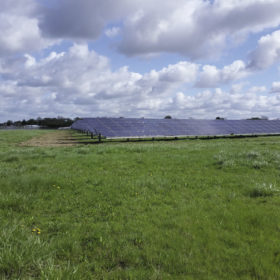
In the jargon-heavy world of solar-speak, C&I handily condenses Commercial and Industrial into a snackable sub-section of the PV industry. But as sub-sections go, the C&I space has perhaps the greatest scope for flexibility, offering a raft of possibilities from ground-mount through to ingenious use of rooftop space. For module manufacturers, C&I also means something else: Challenges and Innovations, writes Ian Clover, Manager Corporate Communications, Hanwha Q Cells.
Beirut Energy Forum: Lebanon’s solar PV takes off
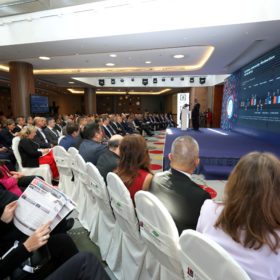
Lebanon’s International Beirut Energy Forum (IBEF) 2018, which took place last week in the country’s capital, saw the announcement of various solar tenders that depict the domestic PV sector’s take off.
India’s Azure closes financing for 300 MW of PV, signs 415 PPAs
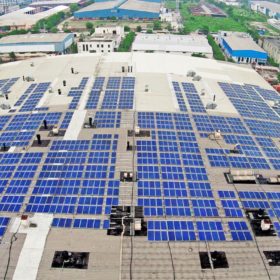
Azure Power has announced the early closing of a financing deal worth INR 4 billion (around US$58 million) for a 100 MW solar plant in the Indian state of Karnataka; and INR 6 billion (around $88 million) for a 200 MW solar power plant in Rajasthan. It also signed 415 rooftop solar PPAs in Madhya Pradesh.

The Philippines needs a cost-effective net metering policy – report
Under the current scheme, rooftop PV remains far below its huge potential in the country. Regulatory, administrative and financial hurdles are preventing more electricity consumers from installing rooftop arrays, as well as the resistance of local utilities.

Greece’s net metering installation figures disappoint
While the Greek Government is in the midst of rolling out a successful series of solar tenders, pv magazine examines the country’s net metering scheme, which was introduced in 2014.
India: Historic low tariff for 35 MW rooftop solar tender
The recent 35.29 MW rooftop solar tender, floated by Madhya Pradesh Urja Vikas Nigam Limited (MPUVNL) hit a historic low tariff of Rs. 1.58 (US$0.022) per unit. Overall, it attracted 31 bidders, and was oversubscribed by 630%.
Big steel goes big solar in the US
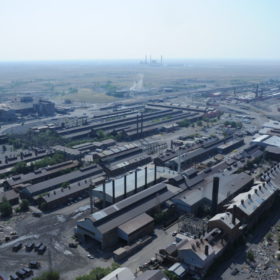
A deal between Xcel Energy and steelmaker EVRAZ includes the building of a 240 MW solar project near the company’s Rocky Mountain Steel mill in Pueblo, Colorado. This is by far the largest behind-the-meter solar project pv magazine staff has heard of to date.
