
Indoor perovskite solar cell built with triple passivation strategy achieves 37.6% efficiency
An international research team has constructed an indoor perovksite PV device by using a triple passivation treatment to reduce crystal defects in the perovskite film. The cell achieved remarkable efficiency and was also able to retain 92% of its initial performance after 3,200 h.

New research shows cast mono wafers are still far from commercial maturity
A Chinese research team has investigated impurity and defect levels in solar cells based on mono cast wafers and have found that around 30% of the devices present an “excessive” reduction in power conversion efficiency. The scientists concluded that cast monocrystalline silicon will unlikely capture a meaningful market share in the near future.
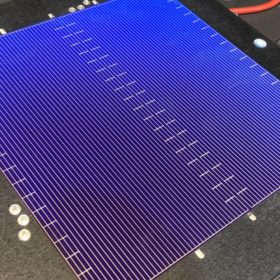
New research warns of unexpected UV-induced degradation in TOPCon solar cells from invisible light
Researchers from UNSW have found that invisible light accelerates UV-induced degradation in TOPCon solar cells, producing the same degradation effects as visible light but at a much faster rate. This can lead to significant open-circuit voltage losses and reduce cell efficiency.

Agrivoltaics on rice fields, not a lost cause
Researchers in Japan have made another attempt to make agrivoltaics on rice fields technically and economically feasible, despite well-known productivity issues when rice is grown below solar modules. They used double-axis tracking, finding potential with careful management of shading and tilt angles.

China poised to remain dominant PV supplier through 2030
New research from Switzerland showed that the recent efforts to counterbalance the dominance of China in the PV industry may lead to “cost-significant” inefficiencies across the entire supply chain. The scientists found, however, that achieving regional supply chain goals can benefit the global PV ecosystem.
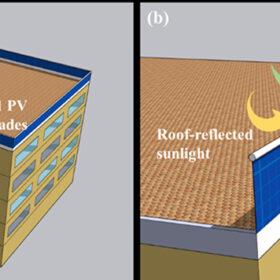
Vertical bifacial photovoltaic balustrade for building edges
Conceived by scientists in Hong Kong, the solar balustrade integrates bifacial PV panels and is considered an ideal solution for “cool roofs.” Roof albedo and module orientation are critical drivers of system performance.

Novel MPPT method combines APO, model-predictive control
An international research team has tested a hybrid control technique combining adapted perturb and observe (APO) with model-predictive control to address complex partial shading in solar arrays. The method, validated through simulation and physical experiments, reportedly outperforms existing approaches.

Impact of hydrogen on silicon solar cell degradation
German researchers have reviewed recent studies on hydrogen-related degradation in silicon solar cells. They said the work is timely, with n-type silicon dominating production and antimony-doping emerging.
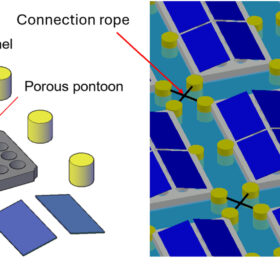
‘Soft-connected’ floating PV for offshore scenarios
An international research team has tested a floating PV system with a “soft-connected” configuration under offshore conditions, using six modular pontoons linked by elastic bar elements to simulate mooring lines and connection ropes.

Passive solar module cooling tech based on atmospheric water harvesting
Researchers in India have developed a cooling technology that uses calcium chloride for atmospheric water harvesting. The system reportedly improves PV module yields by up to 18%.
