
Is thin-film best for offshore PV?
Superior hydrodynamic properties, more robustness in high seas and a much reduced logistics requirement support the case for thin-film over crystalline silicon, pontoon-mounted alternatives, according to an Indo-Italian research group.
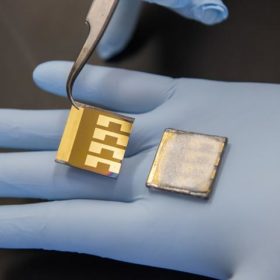
Preventing lead leakage in perovskite cells
A U.S. research group has used a lead-absorbing material to coat the front and rear of a perovskite solar cell stack. The researchers claim the films captured 96% of lead leakage when the cells were damaged.

New layer raises efficiency of heterojunction solar cells
A Dutch research team has used highly transparent, hydrogenated nanocrystalline silicon oxide layers to improve the optoelectrical performance of contact stacks in a silicon heterojunction device. The material is said to offer superior electrical as well as favorable optical properties.

A nanoparticle-sensitized solar cell with 8.5% efficiency
The record feat compares to usual figures of 2-3% for such devices. The Taiwanese scientists who developed the cell said it was prepared with the Silar method and is based on a ternary metal sulfide-alloyed semiconductor. They claim performance could be further boosted.
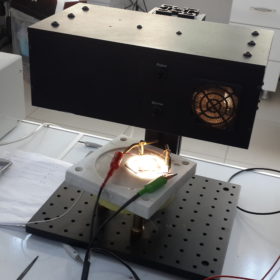
Assessing the impact of micro-cracks in solar glass
A Turkish research team has analyzed how big changes in temperature can affect absorbance, light transmittance and reflectivity in two types of solar glass. The scientists demonstrated lower efficiency in solar cells and the glass itself were attributable to a large number of micro-cracks and deformations on the glass surface.
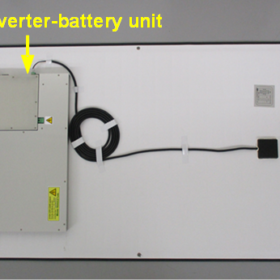
Downsizing silicon carbide inverters
Japanese researchers have investigated the effectiveness of SiC devices in sub-kilowatt applications. A 790g device was tested in a mini PV generator system which included a battery and maximum power point tracker circuit in the same housing. Compared to traditional mini inverters the SiC device showed 3% higher efficiency.
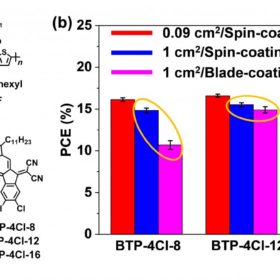
New non-fullerene electron acceptor for 17% efficient organic solar cell
Chinese scientists have developed a cell with a new blade-coating method and BTP-4Cl-12, a kind of acceptor that is a derivative of the Y6 acceptor, which is widely used in organic PV applications. The researchers also claim that the cells can maintain good efficiency levels, even if its surface is lightly expanded.
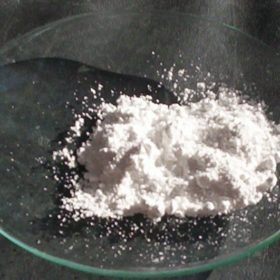
A titanium solar cell with 24% efficiency
The Australian research team which developed the device said the higher efficiency was achieved through a nanowire design which eliminates the interface inside the titanium dioxide band.

An inverted perovskite cell with 22.3% efficiency
Saudi researchers have developed a cell which is said to exhibit improved structural and optoelectronic properties as well as enhanced carrier mobility and diffusion lengths. The feat was achieved by reducing voltage losses using a new passivation technique.

Trimming optical losses in tandem perovskite cells
Spanish researchers have unveiled a monolithic nano-structured perovskite silicon tandem device they claim can reduce optical losses by more than a third compared to planar perovskite cells of the same kind.
