Copper-metalized heterojunction solar cells close to achieve same efficiency as silver-based counterparts
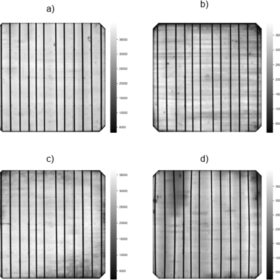
Researchers in Germany have shown that heterojunction solar cells screen printed with silver-copper on the front side and silver paste on the rear side can achieve a 0.13% efficiency gain over reference screen-printed bifacial cells based on silver alone. The research group worked specifically on dispensing and screen printing as printing methods.
PV industry could account for 40% of global silver demand by 2030
New research from Europe shows that the global PV industry may require up to 14,000 tonnes of silver per year in 2030, with global supply being only 34,000 tonnes. The scientists said more efforts should be made to reduce silver content in TOPCon and heterojunction solar cells.
Improving LECO-compatible silver pastes to ensure TOPCon reliabilty
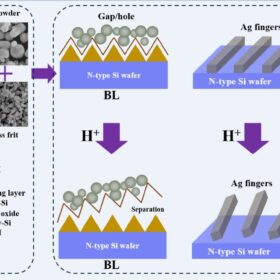
Researchers in China have created new silver pastes for TOPCon solar cell LECO manufacturing. The new pastes integrate either aluminum, gallium or iron and can reportedly keep cells’ electrodes securely anchored to the silicon cell surface due to the enhanced stability of the lead oxide (PbO) component in the glass powder.

DKEM acquires majority stake in silver paste specialist Solamet
Wuxi Dk Electronic Materials Co., Ltd. (DKEM) is acquiring a 60% stake in Solamet. The Chinese silver paste supplier says it aims to absorb Solamet’s patented solar paste technology and global client base amid mounting margin pressures.

TOPCon solar cell built with silver-doped nickel metallization achieves 23.66% efficiency
Scientists in Turkiye claim to have developed a nickel-based TOPCon solar cell with a minimal silver content and almost the same efficiency as fully silver metallized counterparts. The device uses a new nickel contact method that requires a trace of silver of only 0.5 mg/W.
Silver-lean screen-printing can reduce silver use in TOPCon solar cells by 40%
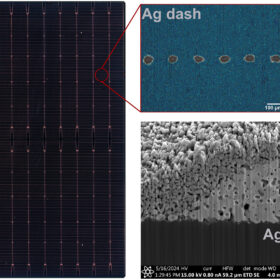
An international research team has developed a metallization technique for TOPCon solar cells that can reportedly reduce silver usage in the devices’ rear side by 85%. The scientists replaced the commonly used Ag fingers with intermittent Ag dashes for contact formation and Ag-free fingers and busbars for electrical conduction.
Average silver price up 21% in 2024, says Silver Institute
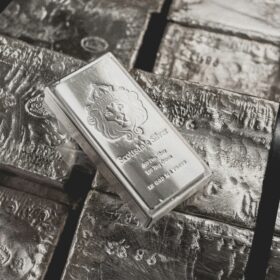
Demand for silver in the PV industry hit 197.6 million ounces in 2024, according to a new report from the Silver Institute. It says the average silver price stood at $28.27 per troy ounce last year, up from $23.35 in 2023.
Fraunhofer ISE developing heterojunction solar cells with silver consumption of less than 2 mg per W
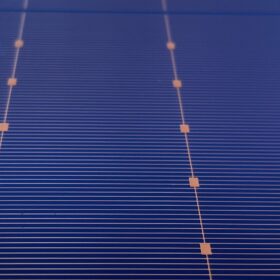
Researchers at the German institute are seeking to reduce silver use in heterojunction PV devices under the umbrella of an extensive research projects. Among their recent achievements there is the fabrication of a heterojunction cell that requires a minimal silver consumption of only 1.4 mg per W.
CEA-INES unveils PV module interconnection tech that reduces silver use by 26%
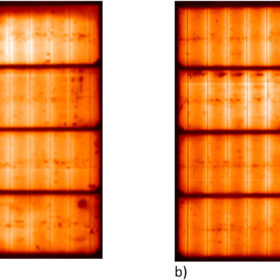
The French research institute found that switching from silver cell metallization to silver-copper metallization can lower the total silver quantity in a heterojunction module, with a total silver amount of only 14 mgAg/W being required. Their interconnection technique is based on low silver content electrically conductive adhesives and copper ribbons.
TOPCon solar cell based on aluminum contacts achieves slightly lower efficiency than silver-based counterpart
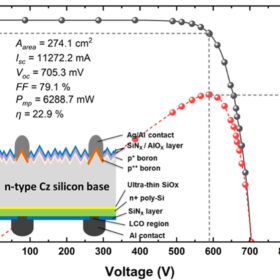
Researchers in Australia have have fabricated an aluminum contact-based TOPCon solar cell based that achieved a power conversion efficiency of 22.92%. The device was built with an aluminum contact manufacturing process that reportedly does not compromise the surface passivation quality of underlying silicon oxide layers.
